Abhishek Chaubey Reflects on 20 Years of Omkara and Saif Ali Khan’s Casting as Langda Tyagi

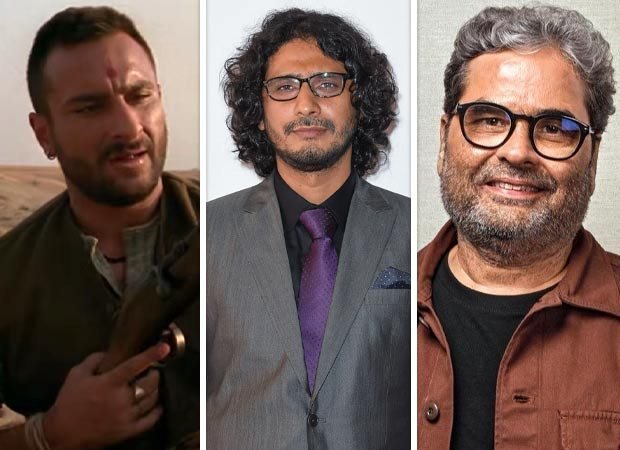
As filmmaker Vishal Bhardwaj’s critically acclaimed film Omkara marks its 20th anniversary, associate director and co-writer Abhishek Chaubey has shared insights into the movie's rapid writing process, its casting choices, and how the team navigated the film's bold language. Speaking from Jharkhand, where he is currently scouting locations for an upcoming web series, Chaubey reflected on the production of the 2006 crime drama.
Omkara is the second installment in Bhardwaj’s Shakespeare trilogy, which also includes Maqbool (2004), adapted from Macbeth, and Haider (2014), adapted from Hamlet. An adaptation of Othello, Omkara starred Ajay Devgn, Saif Ali Khan, Kareena Kapoor Khan, and Vivek Oberoi, who played characters based on Othello, Iago, Desdemona, and Michael Cassio, respectively.
A Rapid Writing Process Under Date Pressure
Chaubey, who considers Omkara a major milestone in his career, revealed that the formal screenplay adaptation was completed in just 18 days. The concept had been discussed informally between Bhardwaj and Chaubey during the post-production of Maqbool, but the project materialized suddenly when producer Kumar Mangat Pathak joined and secured Ajay Devgn for the lead role.
"Ajay was very keen to do a Shakespeare with Vishal but the condition was that his dates were open in January and we were already in September," Chaubey said. "So, we had to write the film in double quick time, otherwise we would lose out on his dates."
To ground the adaptation, Bhardwaj, Chaubey, and co-writer Robin Bhatt traveled to western Uttar Pradesh, spending a week in Meerut to research the local political and criminal landscape. Because Bhardwaj is originally from Meerut, the team was able to meet various local figures, including gangsters and prison inmates. Following this research, the writers traveled to Mussoorie to draft the script, working on a tight daily schedule of discussions, note-polishing, and dialogue writing.
Uncertainty and Conviction Over Saif Ali Khan's Casting
According to Chaubey, Bhardwaj was the only person initially convinced that Saif Ali Khan should play the antagonist, Langda Tyagi. At the time, Khan was primarily known for playing urban, romantic characters, with his only notable negative role being in the film Ek Hasina Thi.
"I wasn’t sure if it would work but Vishal was supremely confident that he would make him do it," Chaubey recalled, adding that others on the team shared his initial skepticism. Khan accepted the role quickly after his mother, Sharmila Tagore, encouraged him by noting that Iago is the most memorable character in the play. Khan's participation was finalized after his schedule cleared due to the postponement of the film Race.
Meanwhile, Kareena Kapoor Khan joined the project quickly, drawn by the strength of the character of Desdemona and the opportunity to work with Bhardwaj and Devgn.
Bold Language and the Censor Board of the Era
Omkara was notable for its frequent use of strong language, particularly by the character of Langda Tyagi. Chaubey stated that Khan did not hesitate to deliver the dialogue, quoting the actor as saying, "I am never going to get a chance to do something like this again."
Addressing how the dialogue was received, Chaubey explained that the language was intended to provide a specific rhythm and poetic feel to the film. He also noted that the Central Board of Film Certification (CBFC) at the time was more permissive of such language compared to the present day.
"In Omkara, there were some dialogue cuts but very minimal, which the committee felt were abusive towards a gender or anything of that sort," Chaubey said. "But otherwise, they let it pass. I think we had a very enlightened Censor Board 20 years ago."
Chaubey also recalled the immediate impact of the popular dialogue "Langda Tyagi Baahubali, Baahubali Langda Tyagi," performed by Deepak Dobriyal alongside Khan. He noted that the crew knew instantly during filming that the scene and the dialogue would become highly popular with audiences.