US Treasury Secretary Warns Allies to Support Economic Campaign Against Iran

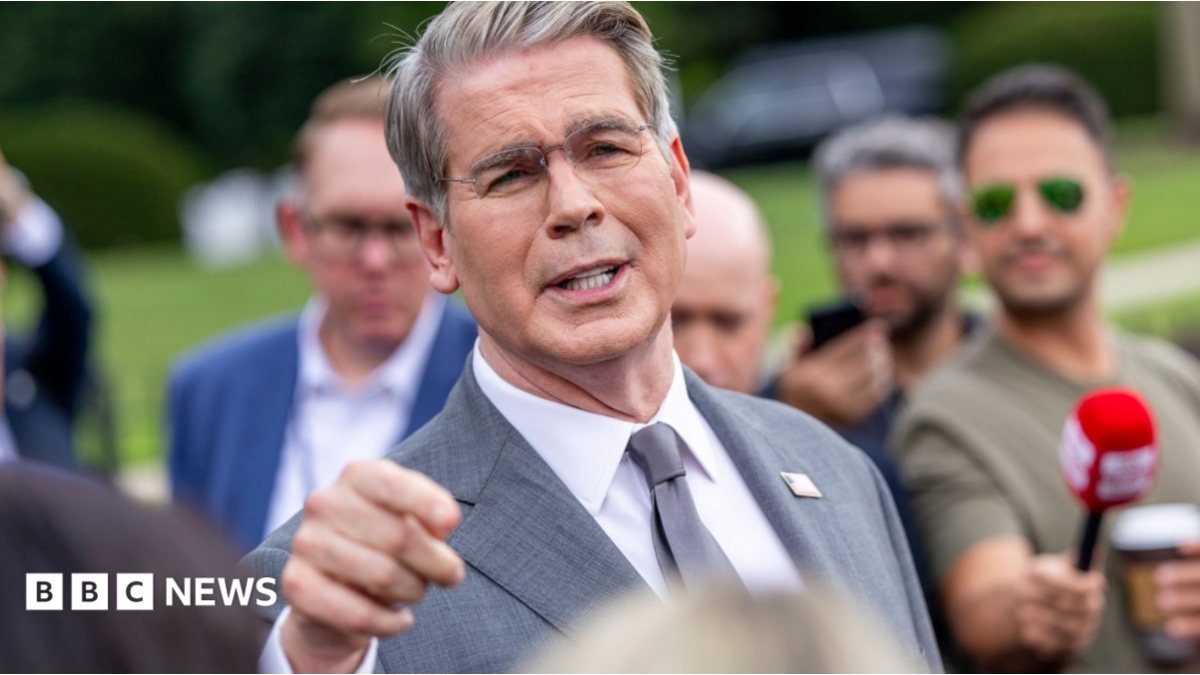
US Treasury Secretary Scott Bessent has urged international allies to support Washington's efforts to "squash" the Iranian economy and force the collapse of its regime. Speaking to broadcaster CNBC, Bessent issued a direct ultimatum to the international community regarding their relations with Tehran.
"It is time for our allies and the rest of the world to make a decision," Bessent said. "You are either with us or against us."
The Treasury Secretary's remarks follow statements from US President Donald Trump, who warned that any country providing "any type of lifeline" to the Iranian regime will face "tremendous economic consequences." While Bessent did not detail the specific measures currently under consideration, he stated that the planned economic pressure campaign is intended to minimize the need for a "large-scale kinetic restart" of military conflict.
The Planned Economic Campaign
Bessent described the upcoming measures as part of "the greatest co-ordinated economic isolation in the history of the world." He warned that the US government would actively target international trading partners that continue to engage with Tehran.
"If you insist on doing business with them, either transferring money, buying their oil... then the US Treasury and the US government will put [their] full might and force towards enforcing against you," Bessent said. He confirmed that further details of the economic plan will be made public during a press conference scheduled for 24 August.
This economic escalation follows a military conflict that began in February, when the US and Israel launched strikes against Iran to prevent it from developing nuclear weapons—an objective Tehran has consistently denied. Iran retaliated by targeting Israel, US military bases in the Middle East, and Gulf Arab allies. The conflict also led to Iran largely closing the Strait of Hormuz, a critical maritime corridor for 20% of global oil and liquefied natural gas, triggering significant fluctuations in global energy prices.
Stalled Peace Talks and Sanctions History
Although the US and Iran agreed to ceasefires in April and June to facilitate peace negotiations, the truces have been repeatedly violated and talks have stalled. Instead of returning to active warfare, the US administration is preparing to launch what it describes as the "most crushing economic operation ever taken against any country."
Prior to this, the US had initiated "Operation Economic Fury," a joint initiative by the US Treasury Department and the Pentagon. This operation involved a naval blockade of Iranian ports and sanctions on foreign banks and businesses to degrade Tehran's revenue streams, despite a June Memorandum of Understanding that had outlined a schedule for the US to terminate all sanctions.
Iran's economy has faced severe strain from decades of international sanctions, which first began following the 1979 Islamic Revolution. Earlier this year, the country experienced widespread protests over inflation and the rising cost of living. Official data showed that in the 12 months leading to February 2026, the cost of basic necessities rose by an average of 60%, while food prices doubled.
Despite these pressures and recent crackdowns on dissent, local residents expressed skepticism to media outlets about whether the new US measures would succeed in collapsing the regime. One resident in Khuzestan told the BBC that Iran's long experience with sanctions would help it overcome the pressure, while another resident told Middle East Lifeline that people have become accustomed to the situation and will find alternative ways to continue trading.