
US Launches 'Economic D-Day' Sanctions Against Iran to Sever Global Financial Ties

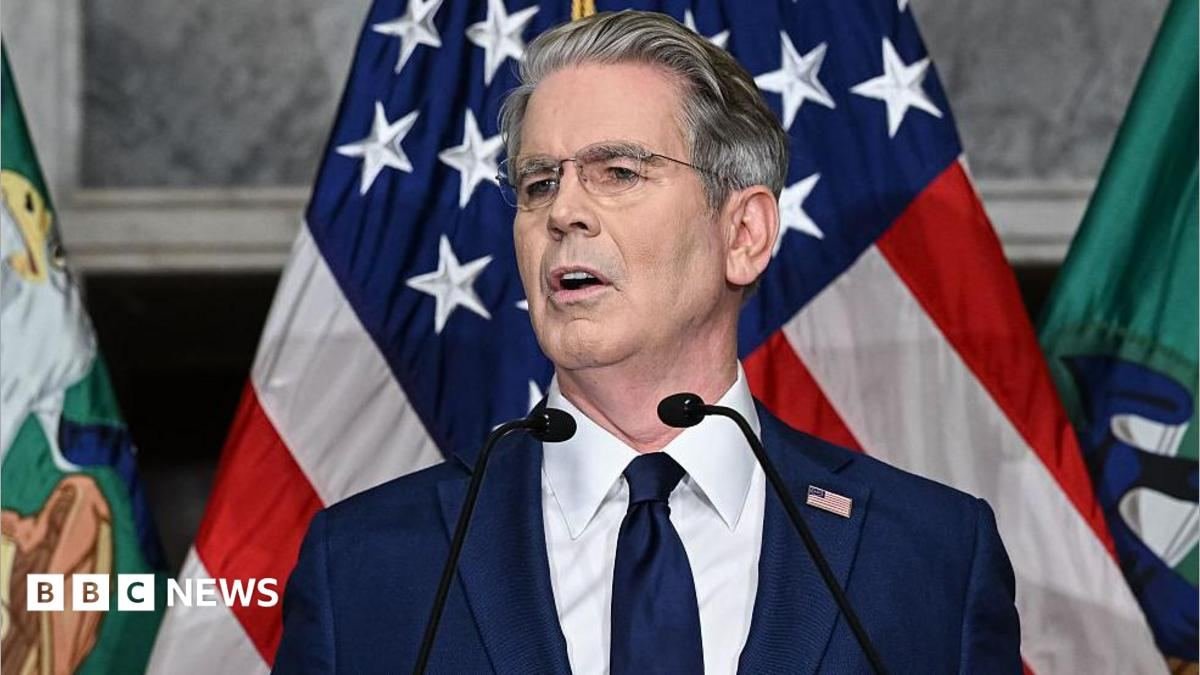
The United States has announced a sweeping array of sanctions against Iran, launching what Treasury Secretary Scott Bessent described as "the single greatest financial offensive ever" against the nation. Under the initiative, which Bessent termed an "economic D-Day" for Iran, the US intends to sever all economic ties with the country and isolate any nation that continues to partner with it financially.
The announcement of the campaign, officially named "Operation Economic Outcast," follows a series of policy shifts and extended deadlines from the White House as it attempts to bring an end to the ongoing conflict. Speaking at a press conference on Monday, Bessent stated that the US is initiating an "economic onslaught against Iran's financial connections around the globe" to force a decision from the Iranian leadership.
"Iran now faces a very clear choice with only two paths before them: complete global isolation... or a path back to normalcy with an opportunity to rejoin the global economy," Bessent said. He further asserted that the US government is "no longer managing the Iranian threat, we are ending it."
Targeted Sectors and Global Warnings
According to the Treasury Department, officials have mapped out the networks, facilitators, and financial channels that Iran has utilized to bypass existing sanctions and trade oil. As part of the new offensive, the Treasury has issued determinations targeting five key sectors of the Iranian economy: digital assets, technology, gold, aviation, and shipping. Additionally, sanctions have been imposed on nearly 60 entities, individuals, and vessels.
Bessent explained that these measures are designed to "tighten the noose and block every potential source of revenue" for the wider Iranian regime and its Islamic Revolutionary Guard Corps (IRGC). He also issued a direct warning to foreign governments and private entities that continue to assist or trade with Iran, stating they can no longer "claim they are blind to enabling this activity."
While the treasury secretary declined to name specific countries during the press conference, he indicated that President Donald Trump would be contacting world leaders directly. These phone calls will include "specific requests to cease their interactions with the regime." Bessent noted that while it is important to allow time for entities to understand the new measures, "they should know that that will move very quickly and that we are serious."
Strait of Hormuz and Global Energy Impact
The escalating economic conflict has already had a significant impact on global energy markets. In response to the latest US threats, Iran has warned that it will halt all regional oil exports if the conflict persists. According to reports from Reuters, the Iranian regime has also issued a new warning advising shipping vessels not to transit through the Strait of Hormuz without its explicit permission.
The Strait of Hormuz, a narrow and highly strategic waterway located south of Iran, typically carries one-fifth of the world's oil and gas supply. However, the passage has been effectively blocked by Iran since the conflict began at the end of February, driving global oil prices upward. On Monday, the global benchmark Brent crude was trading at $92 a barrel.
The resulting surge in oil prices has intensified cost-of-living concerns worldwide, with petrol and diesel prices rising significantly compared to last year. In the US, retail gasoline prices have climbed past $4 a gallon, making fuel affordability a primary concern for American voters ahead of the upcoming mid-term elections in November.
Scepticism Over Sanctions and China's Role
Despite the scale of the US announcement, some market analysts have questioned the potential effectiveness of the new measures. David Oxley, chief climate and commodities economist at Capital Economics, suggested the impact on Iran's energy revenues might be minimal given existing conditions.
"With the renewed US naval blockade already strangling Iran's oil exports, the direct impact of 'economic D-Day' on Iran's energy revenues will be somewhat of a damp squib," Oxley said. He added that Capital Economics suspects the new package will have "only a limited direct impact on Iranian energy flows in the short term."
Oxley pointed out that approximately 90 percent of Iran's oil exports are destined for China. He noted that China "has not recognised US sanctions in the past and is unlikely to be cowed this time either."
Diplomatic Precedents and Financial Context
The current escalation follows previous high-stakes rhetoric from the US administration. In April, President Trump warned that "a whole civilisation will die tonight" unless Iran agreed to a deal to end the war and reopen the Strait of Hormuz. The US subsequently backed down from that stance after Pakistan intervened as a mediator and advocated for diplomatic alternatives.
The broader sanctions framework dates back to the 2015 nuclear deal negotiated by former US President Barack Obama and several international allies, which lifted major sanctions in exchange for limits on Iran's nuclear activities. Trump withdrew the US from that agreement in 2018, calling it "defective at its core," and reinstated full US sanctions. While President Joe Biden later attempted to revive the 2015 agreement, those efforts did not succeed.
In April of this year, the Trump administration initiated a wave of sanctions targeting foreign banks and firms conducting business with Tehran, following military operations that failed to force the Iranian regime's surrender. Domestically, the US Treasury has also attempted to manage economic pressures; last week, Bessent announced a bond market intervention to buy back government debt to lower borrowing rates, though the resulting drop in long-term borrowing costs reversed the following day.