Understanding the 32 Forms of Lord Ganesha and Their Spiritual Significance

Lord Ganesha is revered in Hinduism as the remover of obstacles, worshipped widely for providing wisdom, prosperity, and good fortune. As a central deity in Indian ceremonies and traditions, Ganesha's worship extends across the continent of Asia. Historical and cultural representations of the deity can be found internationally, such as a Ganesha statue located in the Shiva Temple area of the Prambanan Temple in Yogyakarta, Indonesia. Additionally, Chachoengsao is known as the “City of Ganesha” in Thailand, featuring Ganesha statues across three temples, including a 39-metre-high statue at the Khlong Khuean Ganesh International Park.
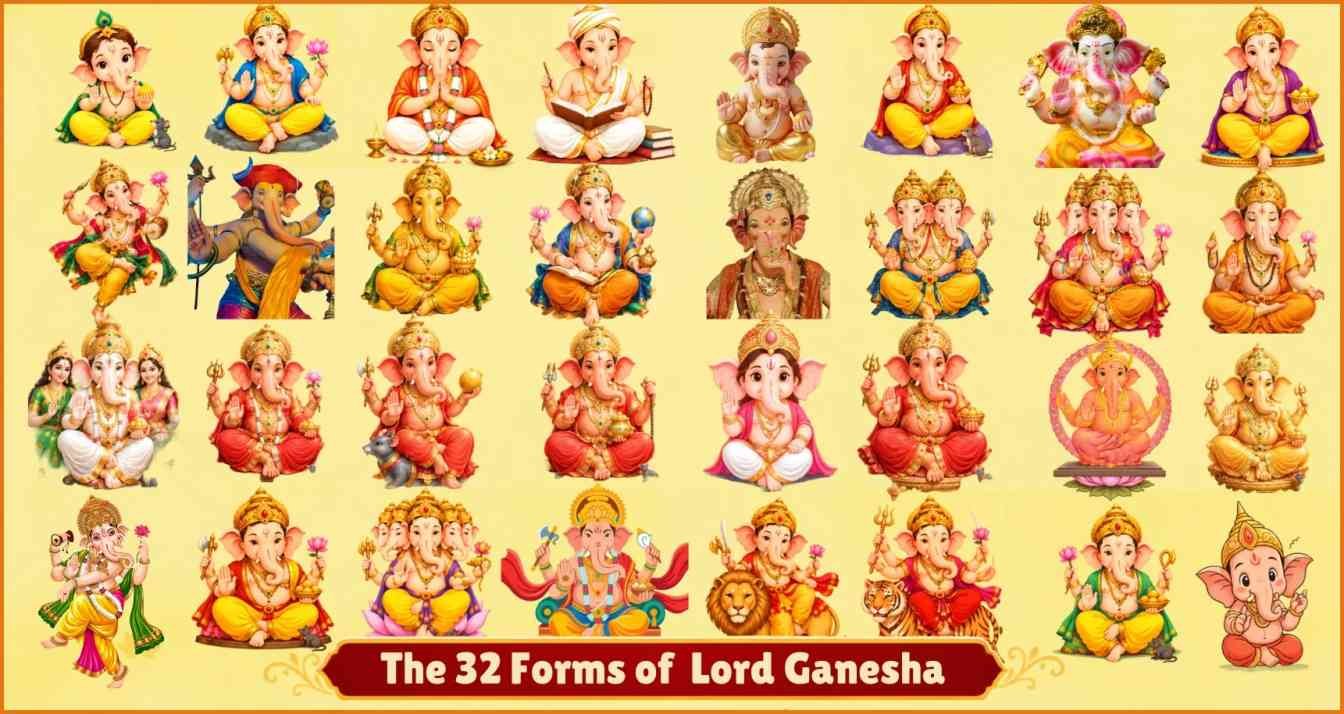
The ancient holy book Mudgala Purana, which is more than a thousand years old, details 32 distinct forms of Lord Ganesha. The Ganesha Purana also references these 32 types, each possessing its own specialization and spiritual significance. These forms are divided into two primary groups: the first set of 16 forms is known as “Shodasa Ganapati”, while the second set of 16 forms is known as “Ekavimsathi”.
The First Sixteen Forms: Shodasa Ganapati
The Shodasa Ganapati represents the first sixteen forms of Lord Ganesha. These forms are associated with virtues such as wisdom, knowledge, devotion, success, bravery, and protection. Some of these forms are believed to assist with the initiation and development of new businesses, while others help devotees navigate personal difficulties. The sixteen forms are categorized by specific attributes:
- Bala Ganapati: Represents the purity, joy of childhood, and a fresh perspective of hope.
- Taruna Ganapati: Represents youthful energy, positivity, and progress.
- Bhakta Ganapati: Symbolizes genuine devotion, humility, faith, and a loving relationship with the divine.
- Dvija Ganapati: Symbolizes wisdom, learning, and the pursuit of knowledge.
- Siddhi Ganapati: Symbolizes success and the realization of dreams.
- Ekadanta Ganapati: Symbolizes wisdom, clear thinking, concentration, and breaking away from limitations.
- Kshipra Ganapati: Represents swift blessings and assistance in resolving problems.
- Kshipra Prasada Ganapati: Symbolizes quick help and the removal of difficulties.
- Vira Ganapati: Represents courage, strength, and determination, worshipped to overcome difficulties and eliminate enemies.
- Vighna Ganapati: The destroyer of internal and external obstacles, typically prayed to at the start of any task.
- Heramba Ganapati: Associated with providing protection and fearlessness to the weak.
- Ganapati Uddanda: The brave “Enforcer of Dharma” or the law of existence, depicted with ten hands holding various symbolic items, including a gem pot, blue lotus, sugar cane, mace, lotus blossom, paddy sprig, pomegranate, rope, garland, and a broken tusk.
- Simha Ganapati: White-colored form shown riding a lion and holding a lion, along with a vina, lotus flower, chakra, bouquet, gem-filled pot, and a twig from the kalpavriksha.
- Durga Ganapati: An invincible form associated with the Mother Goddess Durga, possessing eight hands holding a bow and arrow, goad and noose, prayer beads, rose apple, and a broken tusk.
- Sankatahara Ganapati: An incarnation that helps devotees overcome life's obstacles.
- Shakti Ganapati: Signifies divine union, creativity, confidence, and spiritual dynamism.
The Second Sixteen Forms: Ekavimsathi Ganapati
The second group of sixteen forms, known as the Ekavimsathi Ganapati, is associated with wealth, prosperity, creative abilities, spiritual development, and internal harmony. These forms emphasize that Ganesha's role extends beyond clearing obstacles to fostering personal growth and deep meditation:
- Lakshmi Ganapati: Worshipped for wealth, success, wisdom, and a balanced approach to prosperity.
- Maha Ganapati: The highest cosmic incarnation of Lord Ganesha, revered for spiritual realization, a bright future, and divine blessings.
- Vijaya Ganapati: Represents victory, determination, confidence, and success in achieving goals.
- Dhundhi Ganapati: Worshipped for removing obstacles and shielding devotees from evil powers.
- Runamochana Ganapati: Symbolizes deliverance from financial, spiritual, and familial debts.
- Varada Ganapati: Represents benevolence, blessings, and the realization of dreams.
- Ekakshara Ganapati: Represents the ultimate truth, focusing on deep meditation and spiritual energy.
- Tryakshara Ganapati: Represents spirituality and prosperity.
- Nritya Ganapati: Represents joyfulness, creativity, and human artistic expression.
- Urdhva Ganapati: Symbolizes spiritual enlightenment, upward progress, and divine strength.
- Haridra Ganapati: Represents protection, prosperity, and good fortune, and is popular in Tantric worship.
- Srishti Ganapati: Represents creative processes, new ideas, and new beginnings.
- Ucchishta Ganapati: Represents spiritual knowledge and the elevated flow of divine power.
- Dvimukha Ganapati: Represents dual wisdom, encompassing both material and spiritual knowledge.
- Trimukha Ganapati: Represents the personification of the Trimurti (Brahma, Vishnu, Shiva) and cosmic control.
- Yoga Ganapati: Represents meditation, inner calmness, spirituality, and union with the divine.
Choosing a Ganesha Idol for the Home
While there are 32 distinct forms, traditional guidance indicates there is no requirement to keep all 32 idols in a household. Devotees can choose an idol based on the specific symbolism that aligns with their personal needs. Five primary factors help identify the different forms of Ganesha: color, the number of arms, the specific meaning of the form, the presence of a noose (pasha) representing control, and the goad (ankusha) representing mental discipline.
A Ganesha idol featuring a broken tusk and a blue color represents the wise Ekadanta form, which is commonly found in Indian temples. Idols depicting Ganesha alongside his companions, Riddhi and Siddhi, are generally identified as Lakshmi Ganapati or Maha Ganapati, representing the union of wealth and wisdom. A simple representation of Ganesha without companions is associated with Bhakta Ganapati, representing the devotee's Ganesha.
Regardless of the specific form chosen, all variations of Ganesha share core symbolic elements. The broken tusk represents sacrifice made for the world, while the goad symbolizes progress and mental control. Every form ultimately conveys the dual concept of removing obstacles and encouraging the determination to move forward.