
Tech Stocks Recover Slightly After Massive Global Sell-Off Wipes Trillions in Market Value

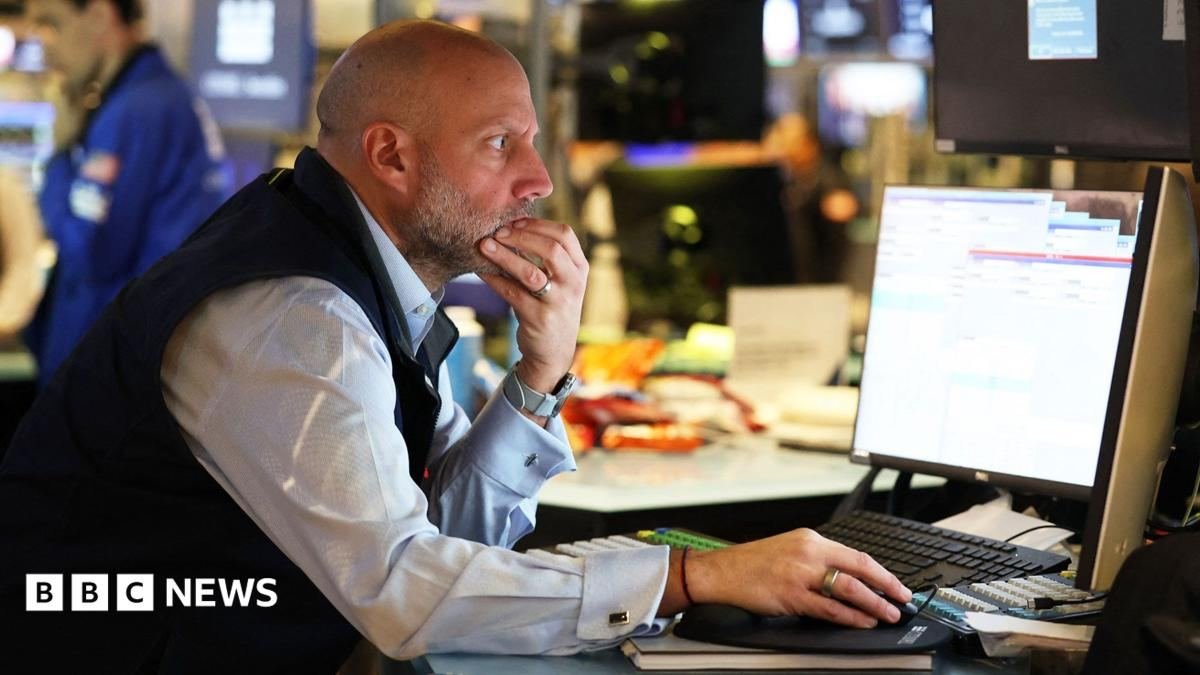
Shares in artificial intelligence and technology firms have recovered slightly following an enormous global sell-off that wiped trillions of dollars off market values. The tech-heavy Nasdaq stock index closed in positive territory after a market rout that originated in the United States on Thursday extended into Asian and European trading on Friday.
Investors engaged in selling tech shares partly due to concerns that a Democrat victory in the midterm elections could result in slower artificial intelligence development. However, fresh economic figures added to a mixed picture for American markets on Friday morning, with US employers adding an unexpectedly strong 165,000 jobs to the economy in October, well above the average monthly increase and more than double analysts' expectations.
US Indexes Rebound While Global Markets Decline
On Thursday, businesses closely tied to artificial intelligence development experienced severe losses, particularly chip and semiconductor manufacturers. The Nasdaq Composite reversed part of its 5.5% decline on Friday, ending the day up 1.1%.
The S&P 500, which tracks share prices of the largest publicly traded US companies, closed up 0.3%, while the Dow Jones Industrial Average remained flat throughout the day before ending slightly down by 0.4%. Several companies that previously lost hundreds of billions in market value regained ground on Friday, including Nvidia, SpaceX, and Tesla.
Despite the modest recovery in the US, stock markets across Asia and Europe registered sharper declines. South Korea's Kospi index closed down 6% on Friday, led by chipmaker SK Hynix, whose shares plunged more than 10%. Major indexes in Germany, France, and Spain also ended the day lower. In the United Kingdom, the FTSE 100 declined 1.01% as British traders digested a recent decision by the Bank of England to raise interest rates, along with signals that another rate hike could occur to manage rising prices.
Political Developments and AI Infrastructure Concerns
The market volatility coincided with a sweeping Democrat victory in the US midterm elections. Multiple Democratic candidates campaigned for new regulations on artificial intelligence and data centres. The party subsequently secured control of both houses of Congress, as well as key state-level contests located in regions active in the AI data centre expansion.
Responding to the broader sector trends, US President Donald Trump reiterated his support on Friday for what he termed "super intelligence," stating that only "foolish leadership" would reject the economic benefits it brings.
At the same time, market participants expressed concern over whether substantial expenditure on artificial intelligence will yield expected returns. Russ Shaw, founder of global tech advocacy firm Tech London Advocates, stated that the election outcome signals a need to reassess sector messaging, noting that the incoming Congress will focus heavily on AI and that companies have not effectively communicated the benefits of the technology.
Pierre Baqué, chief executive of AI platform Neural Concept, described the share price movements as a necessary market correction tied to legitimate concerns regarding AI infrastructure spending, asserting that the industry must demonstrate financial discipline beyond raw infrastructure investment.
Labor Data and Market Outlook
Alongside market volatility and political shifts, investors monitored the latest figures from the US Bureau of Labor Statistics. The official data showed the US unemployment rate eased slightly to 4.1% in October from 4.2% in September, remaining within a narrow range of 4.1% to 4.3% recorded since March.
Commenting on the economic indicators, Neil Birrell, chief investment officer at Premier Miton, noted that strong US economic performance suggests real-economy risks may be less severe than currently feared by financial markets.
Looking ahead to upcoming trading sessions, Dan Coatsworth, head of markets at AJ Bell, highlighted that following a brutal week, subsequent market movements would clarify whether the rebound in the Nasdaq and S&P 500 can be sustained.