
Private Part, Public Shame: The Erasure of Women's Bodies in Public Spaces

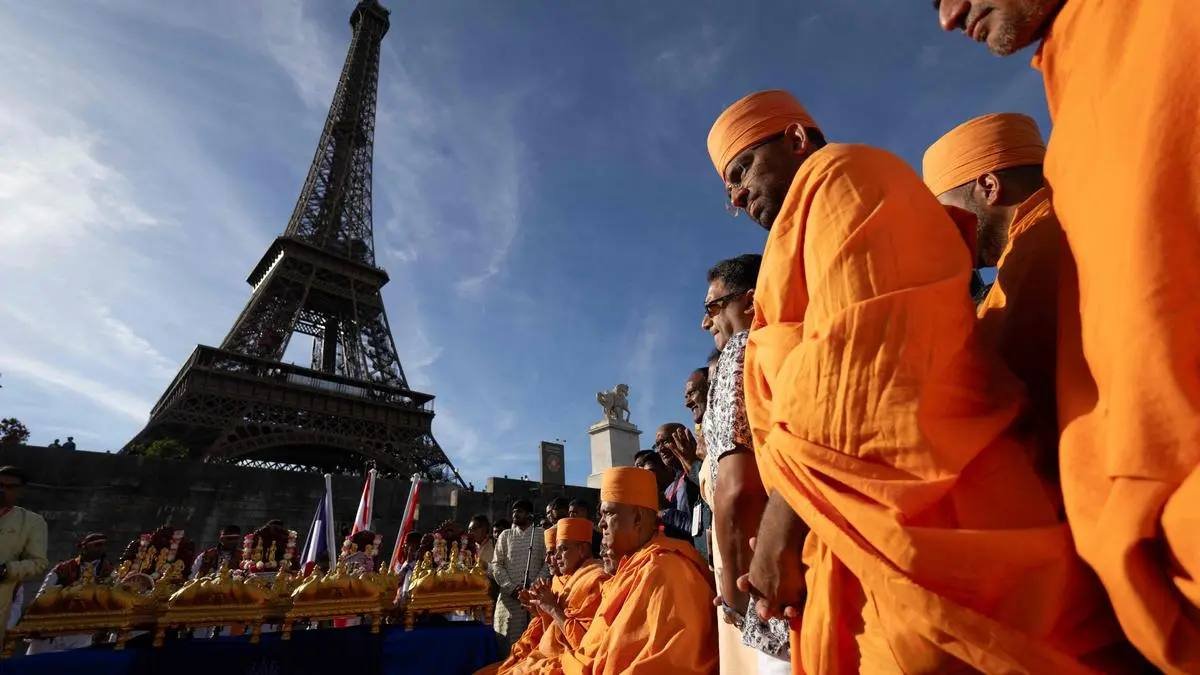
On September 8, a group of Indian monks touring Paris requested that the Eiffel Tower be cleared of women for the duration of their visit. This seemingly innocuous request was, in reality, a heinous crime that erased half the world's population.
The incident highlights the pervasive issue of religious and social customs dictating where women can go, whom they can worship with, and how their bodies should be regarded. As a surgeon, Kalpana Swaminathan is often faced with the question of who owns the body, and she argues that the body is private property, yet it is subject to directives from various connections, including familial, societal, communal, national, and religious.
Traditions of Misogyny
Traditional directives on the body are universally misogynistic, posing the female body as a threat, menace, or pollution. These attitudes predate formal religions and are rooted in ancient customs that are still operative in India today. The notion that menstrual blood is toxic or semen is tonic is ridiculous, yet it forms the basis of traditional beliefs.
The control of women's bodies is a means of controlling their lives. The more veiled in ambiguity and euphemism women's private parts are in the name of decency and modesty, the more public is their universal shaming. This is the locus of evil, capable of contaminating all that is spiritually elevating.
Denial of Rights
The punishments for owning these private parts are traditional too: denying women the rights to education and worship. These deprivations aim at complete intellectual nullity. However, women are still denied opportunity and recognition in the higher echelons of knowledge and skills, but even that is being fiercely combated.
Religious misogyny continues unbridled, more out of the dread of societal rejection than from divine retribution. Women upholding such misogyny is a paradox, as seen in the public protests following the judgment against excluding women from undertaking the Sabarimala pilgrimage, where most of the protesters were women.
A Crime Against Humanity
The presence of women is not a threat to male celibacy, and to consider it as such is an open admission that all men are creatures of rampant lust. This is detrimental to civil society and embodies paranoia. Heeding these rules today would be the lowest form of misogyny, reducing a woman's body to a mere receptacle for semen.
Traditions that impinge on the privacy of the body are crimes that threaten the integrity of life itself. Upholding the tradition of viewing a woman's body as a source of spiritual pollution would be a far graver error than a miscarriage of justice. It would be a crime against humanity, worse, a crime against the children we nurture, an impediment to their enlightenment.
Rules are meant to be broken, and it is time to challenge these traditions that perpetuate harm to our children. It is time to ask if they embody harm to our children and to break free from the moral inertia of unquestioned continuums through time.