PM Modi Gifts Russian Translation of Thirukkural to President Putin at BRICS Summit
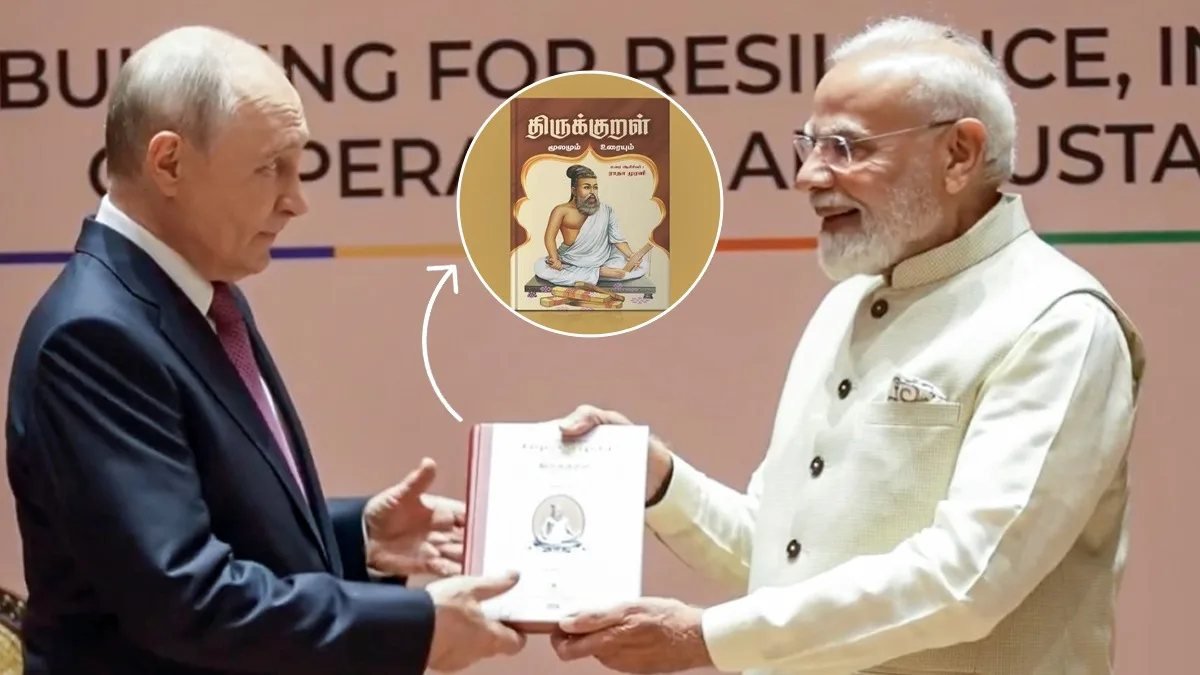
Prime Minister Narendra Modi presented a Russian translation of the sacred Tamil literary classic, the Thirukkural, to Russian President Vladimir Putin during the 18th BRICS Summit in New Delhi. The gift is part of an ongoing effort by the Prime Minister to promote Tamil language, culture, and literature on the global stage.
Speaking about the gesture, Prime Minister Modi stated, “I presented a Russian translation of the sacred Thirukkural by the divine scholar Thiruvalluvar to Russian President Putin. The Thirukkural proclaims the immeasurable wisdom of Thiruvalluvar that transcends national borders and languages. I hope this book helps strengthen our people-to-people connections.”
The Universal Significance of Thirukkural
Written by the saint-poet-philosopher Thiruvalluvar, the Thirukkural is a foundational masterpiece of Tamil literature. It consists of 1,330 short, two-line couplets structured around seven words per line, divided into 133 chapters. The work is traditionally categorized into three sections: virtue (Aram), wealth (Porul), and love (Inbam).
Often referred to as the "Ulaga Podhu Marai" (universal scripture) or the "Common Creed of Humanity," the text is celebrated for its secular character, as it does not promote any specific deity, religion, or caste. Historians date the work back to the first century. First published in English in 1840, the Thirukkural has since been translated into more than 60 languages, offering practical guidance on ethics, governance, diplomacy, and daily human relationships.
The Russian Connection and Global Translations
The Russian edition presented to President Putin was translated by Naira Mkrtchyan and published by the Central Institute of Classical Tamil in 2026. The volume features the original Tamil verses alongside their transliteration and Russian translation. According to Prime Minister Modi, the book serves as “a cultural bridge to share Bharat’s civilisational wisdom with Russian readers and deepen people-to-people connections between the two nations.”
The text holds a historical connection to Russia, where Indian philosophy has long influenced intellectuals. Leo Tolstoy, one of Russia’s most celebrated writers, is believed to have read an early 19th-century translation of the Thirukkural, which influenced his correspondence with Mahatma Gandhi. Historically, French translator E. S. Ariel described the work as “a book without a name by an author without a name,” while Anglican missionary and Tamil scholar George Uglow Pope called Thiruvalluvar “The Bard of Universal Man.”
Broad Support for Tamil Cultural Diplomacy
The presentation of the text has drawn widespread praise across political and cultural spheres. Tamil Nadu Governor Rajendra Vishwanath Arlekar called the gesture a moment of immense pride for Tamil Nadu and India. Puducherry Lieutenant Governor K. Kailashnathan thanked the Prime Minister, describing the Thirukkural as an “eternal beacon of ethics and good governance.”
Sridhar Vembu, promoter of the Zoho Group, shared on social media that the presentation demonstrated the Prime Minister's “genuine love and respect for Tamil and our Classic literature.” Even DMK spokesperson Sas Hafeez Ullah acknowledged the national significance of the work, stating that the Thirukkural is “not only the pride of Tamil Nadu” but “the pride of India.” Thuglak editor S. Gurumurthy also lauded the diplomacy, noting how showcasing such heritage connects India's ancient civilization with modern global engagement.
Strategic and Military Studies
Beyond its literary and ethical value, the Thirukkural is utilized in modern strategic planning. The Indian Army studies the text alongside Kautilya’s Arthashastra and Kamandaka’s Nitisara for insights into statecraft, diplomacy, and warfare.
During the Kashi Tamil Sangamam, Prime Minister Modi released editions of the Thirukkural translated into 13 languages. He has also proposed translating the couplets into Uzbek during a visit to Tashkent in August 2026 to introduce its philosophy to Central Asian audiences.
A History of Promoting Tamil Heritage
Prime Minister Modi has consistently integrated Tamil literature into his domestic and international engagements. In his 2019 address to the United Nations General Assembly, he quoted the Tamil poet Kaniyan Pungundranar: “Yaadhum Oore Yaavarum Kelir” (We belong to all places, and to everyone).
In July 2020, during a visit to troops in Ladakh, he quoted Thiruvalluvar on the virtues of valour, honour, and credibility. He also referenced the Thirukkural during his 2019 Independence Day address to highlight the importance of water for the Jal Jeevan Mission, and released a Thai translation of the text during a visit to Thailand. In July last year, alongside Papua New Guinea Prime Minister James Marape, he released a translation of the classic in the Tok Pisin language.
In addition to literature, the Prime Minister has showcased other aspects of Tamil heritage, such as the Ramanathaswamy Temple in Rameswaram, during BRICS 2026 engagements. Supporters point to these actions as evidence of a sustained focus on elevating Tamil culture globally, independent of domestic political debates surrounding the representation of Thiruvalluvar.