Petrol in Delhi Would Have Hit Rs 125 Without Ethanol Blending, Government Says

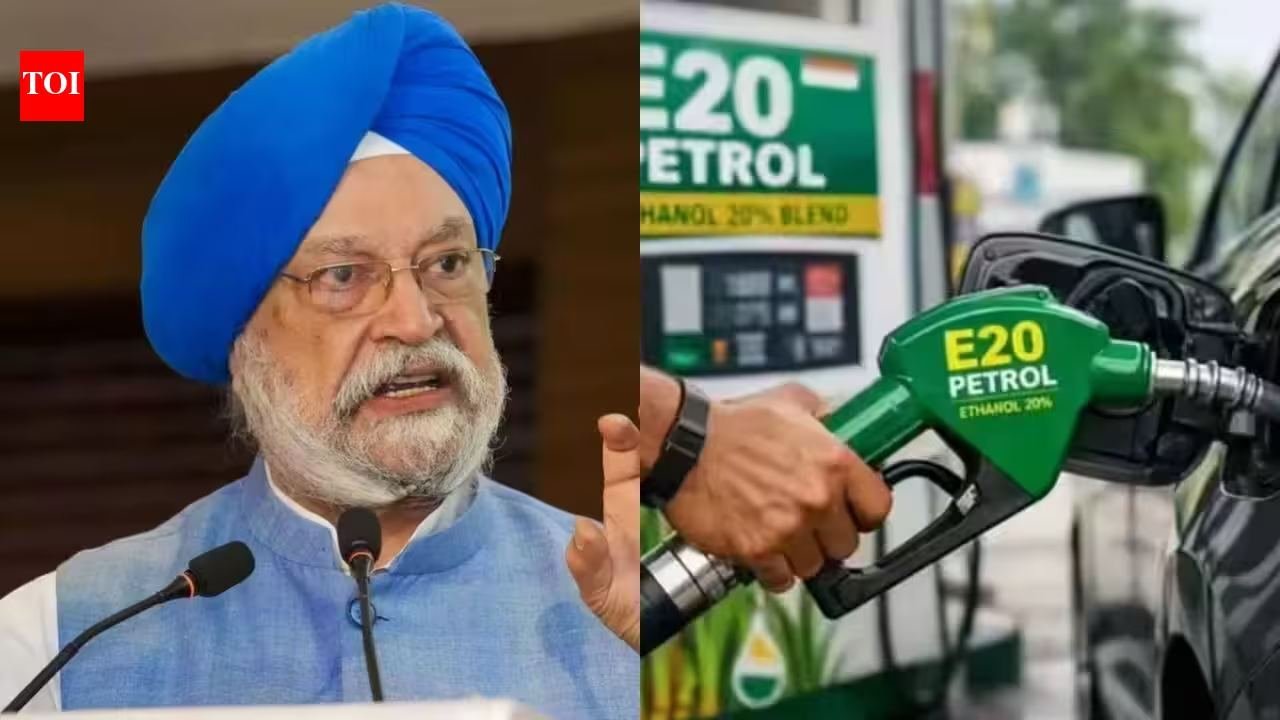
The Union petroleum ministry on Friday defended the national ethanol blending programme, stating that petrol prices in Delhi would have reached approximately Rs 125 per litre when global crude oil prices peaked at $135 per barrel, had domestic oil marketing companies not blended ethanol into the fuel. According to the ministry, the integration of domestically procured ethanol helped insulate retail consumers from extreme crude oil price volatility.
Instead of the projected Rs 125 per litre, consumers in Delhi paid Rs 94.77 per litre at the peak of the price crisis. The ministry explained that ethanol, which is procured domestically at pre-agreed prices, constituted 20 percent of every litre of fuel. This blending process resulted in savings of nearly Rs 30 per litre for consumers during the peak period.
Following the outbreak of the West Asia conflict on February 28, the government maintained steady petrol and diesel prices for nearly 75 days before increasing them by Rs 7.5 per litre in May. Currently, standard E20 petrol (91-octane) is priced at Rs 102.12 per litre in Delhi, while 100-octane petrol costs Rs 169 per litre.
Food Security and Subsidy Allegations Denied
The petroleum ministry also addressed concerns regarding the impact of the ethanol programme on food security and allegations of taxpayer subsidies. The ministry denied claims that foodgrains intended for the poor were being diverted to produce ethanol. Furthermore, it rejected allegations that subsidised rice from the Food Corporation of India (FCI) was being utilized to support the ethanol blending initiative.
Vehicle Fuel Efficiency and Performance
Addressing questions regarding fuel efficiency, the Ministry of Road Transport and Highways presented findings to the Lok Sabha on Thursday. Citing a joint study conducted by the Automotive Research Association of India (ARAI), the Society of Indian Automobile Manufacturers (SIAM), and Indian Oil Corporation (IOC), the ministry stated that BS-III, BS-IV, and BS-VI vehicles originally designed for E10 fuel might experience a 2% to 6% drop in fuel efficiency when run on E20 fuel, depending on the vehicle's category and age.
This finding aligns closely with earlier statements from the petroleum ministry, which informed the Rajya Sabha on July 20 that the reduction in fuel efficiency for such vehicles is limited to approximately 3% to 5%.
Both ministries emphasized that the Ethanol Blended Petrol programme has been implemented through a phased, scientifically validated process. Blending levels were increased gradually alongside the development of production capacity and distribution infrastructure.
Scientific Validation and Industry Consultation
Union Road Transport Minister Nitin Gadkari informed the Lok Sabha that the transition to E20 fuel was initiated only after comprehensive validation of fuel systems, engine durability, drivability, material compatibility, and emissions performance. Throughout this process, the government consulted with key stakeholders, including automakers, oil marketing companies, and representatives from the sugar and grain industries.
The government stated that both laboratory studies and real-world data confirm there is no adverse impact on vehicle performance from using E20 fuel. According to official figures, more than 20 crore two-wheelers and over 3 crore petrol cars have operated on these ethanol-blended fuels without any verified evidence of engine failure linked to the blending process.