Pat Cummins Strongly Denies Usman Khawaja's Cape Town Sandpaper Allegations

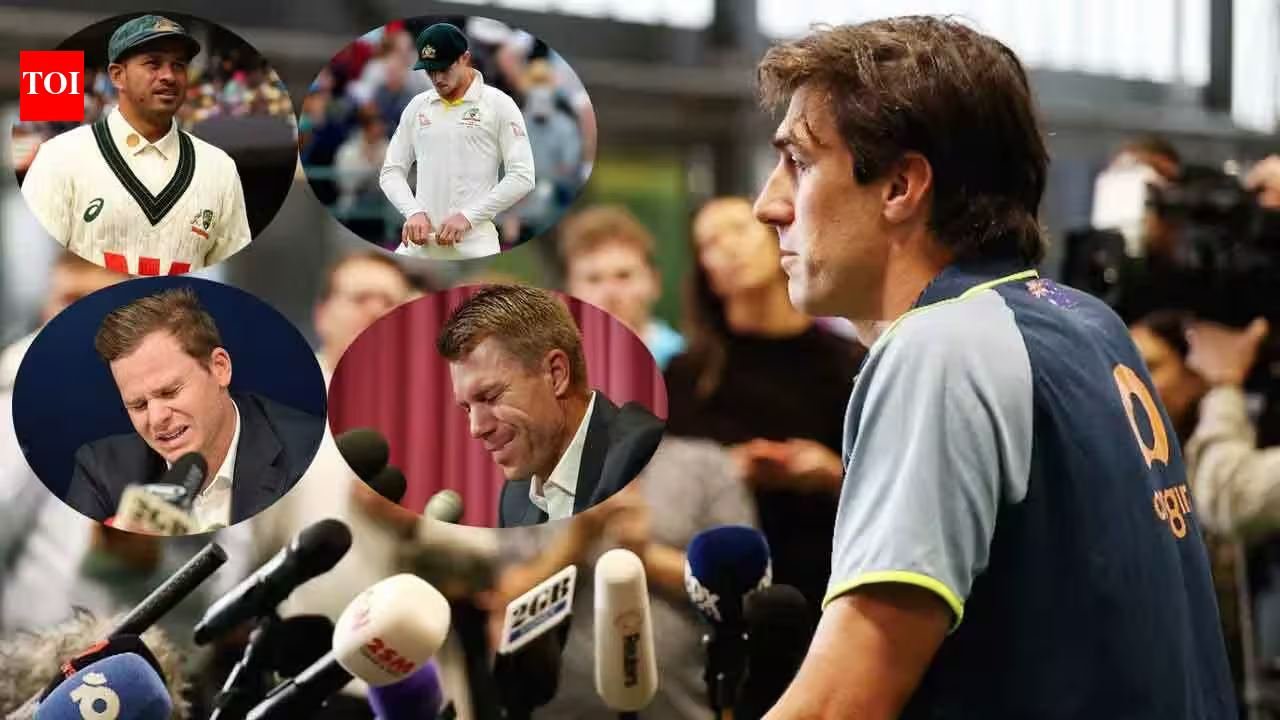
Australia captain Pat Cummins has forcefully rejected claims made by teammate Usman Khawaja regarding the 2018 ball-tampering scandal in Cape Town, calling the allegations "100% wrong" and "complete and utter nonsense." Speaking at a 68-minute press conference at Cricket Central in Sydney, Cummins addressed assertions published in Khawaja's recently released autobiography concerning the Australian team's knowledge and actions during the South Africa tour.
In his book, Khawaja alleged that the entire Australian XI was aware of sandpaper being used to alter the condition of the ball during the Cape Town Test. Khawaja also claimed that two players refused to take collective responsibility for the incident, and revealed he had told Cameron Bancroft to be careful when using sandpaper. Responding to the claims, Cummins insisted he had no prior knowledge of illegal methods being brought onto the field.
"When he says we all knew, if by that he means that we knew sandpaper was going out on the field, he's 100% wrong," Cummins said. "I've said that consistently for the last eight years, I did not know that was happening." Cummins expressed shock at Khawaja's disclosure regarding Bancroft, noting that friends should not be casual with one another's reputations while adding that individuals must remain accountable for their statements.
Rejection of a Ball-Tampering Master-Plan
Addressing suggestions that a orchestrated strategy existed within the squad to illegally alter the ball, Cummins acknowledged that the Australian team operated under a win-at-all-costs mentality in 2018, accompanied by internal group divisions. However, he firmly denied that any collective plan was established to use sandpaper or illegal objects.
"There was no master-plan around using illegal methods," Cummins stated, explaining that people often incorrectly assume the team moved directly from legal ball-maintenance techniques to a coordinated illegal scheme. He reiterated that no team meetings or instructions from bowlers took place regarding the use of sandpaper.
Cummins also addressed Khawaja's allegation that sandpaper had been used near the boundary prior to a session during the earlier Port Elizabeth Test in Gqeberha. Cummins described the claim as a complete surprise and news to him, noting that match umpires hand the ball to players in the middle and that he had no memory of such an event occurring.
Reflecting on his wider playing career, Cummins stated that the only time he had ever seen an illegal object used on a ball was during an early career Sheffield Shield match. He recalled a senior New South Wales batter using a bottle cap on the ball, adding that umpires immediately intervened and dealt with the situation on the field.
Disputes Over Collective Responsibility and Investigation Process
Khawaja's book detailed a team meeting where he reportedly asked the Australian squad to take collective responsibility for the Cape Town incident, claiming two players refused to support the proposal. Cummins disputed this account, stating he has no recollection of such a discussion or meeting ever taking place.
"I don't remember any conversation around collective responsibility," Cummins said. "I don't remember any team meeting where he stood up and said, 'Let's all own this as a team'. So then, to follow on, no, I've got no idea who those two people would be because I don't remember ever being asked or having a conversation about it."
Regarding Cricket Australia's original 2018 inquiry, conducted by former head of integrity Iain Roy and High Performance manager Pat Howard, Cummins confirmed he was formally interviewed. He stated that members of the bowling attack were specifically questioned and players were given open opportunities to present information. Cummins noted he was completely truthful during the process.
Khawaja had written that he was not interviewed despite sitting next to Bancroft in the dressing room. Cummins revealed he spoke with Cricket Australia chief executive Todd Greenberg prior to the press conference, who confirmed that past investigation records showed consistent accounts from interviewed players. While Greenberg previously stated the governing body will not reopen the probe, Cummins remarked that any decision to reopen the investigation rests solely with Cricket Australia.
Personal Impact, Penalties, and Team Relationships
Cummins confirmed he had spoken directly with Khawaja during the week. Although he was advised that certain claims in the book were "probably defamatory," Cummins explicitly ruled out taking legal action, stating that a line must be drawn after eight years. However, he expressed concern over the emotional toll the resurfaced allegations have taken on players and their families.
"This is people's real lives, and this is serious," Cummins said, mentioning the distress caused to family members and describing the original 2018 ordeal as traumatic for everyone involved in Australian cricket. He called bringing the topic back up in a casual manner irresponsible.
Cummins reiterated his long-standing view on the sanctions imposed by Cricket Australia in 2018 on Steve Smith, David Warner, and Cameron Bancroft. He described the initial bans as "way too heavy-handed" and "way over the top." While he has not communicated with Warner or Bancroft since the book's release, Cummins emphasized he holds no personal issues with Bancroft.
Finally, Cummins clarified his relationship with vice-captain Steve Smith, who recently missed the third Test in South Africa with a neck injury. Cummins dismissed speculation of tension within the team regarding Smith's absence, confirming that Smith is recovering, scheduled to play Sheffield Shield cricket soon, and that both leaders remain fully aligned ahead of the upcoming international schedule.