Omar Abdullah's Resolution Seeks Restoration of Jammu and Kashmir's Statehood

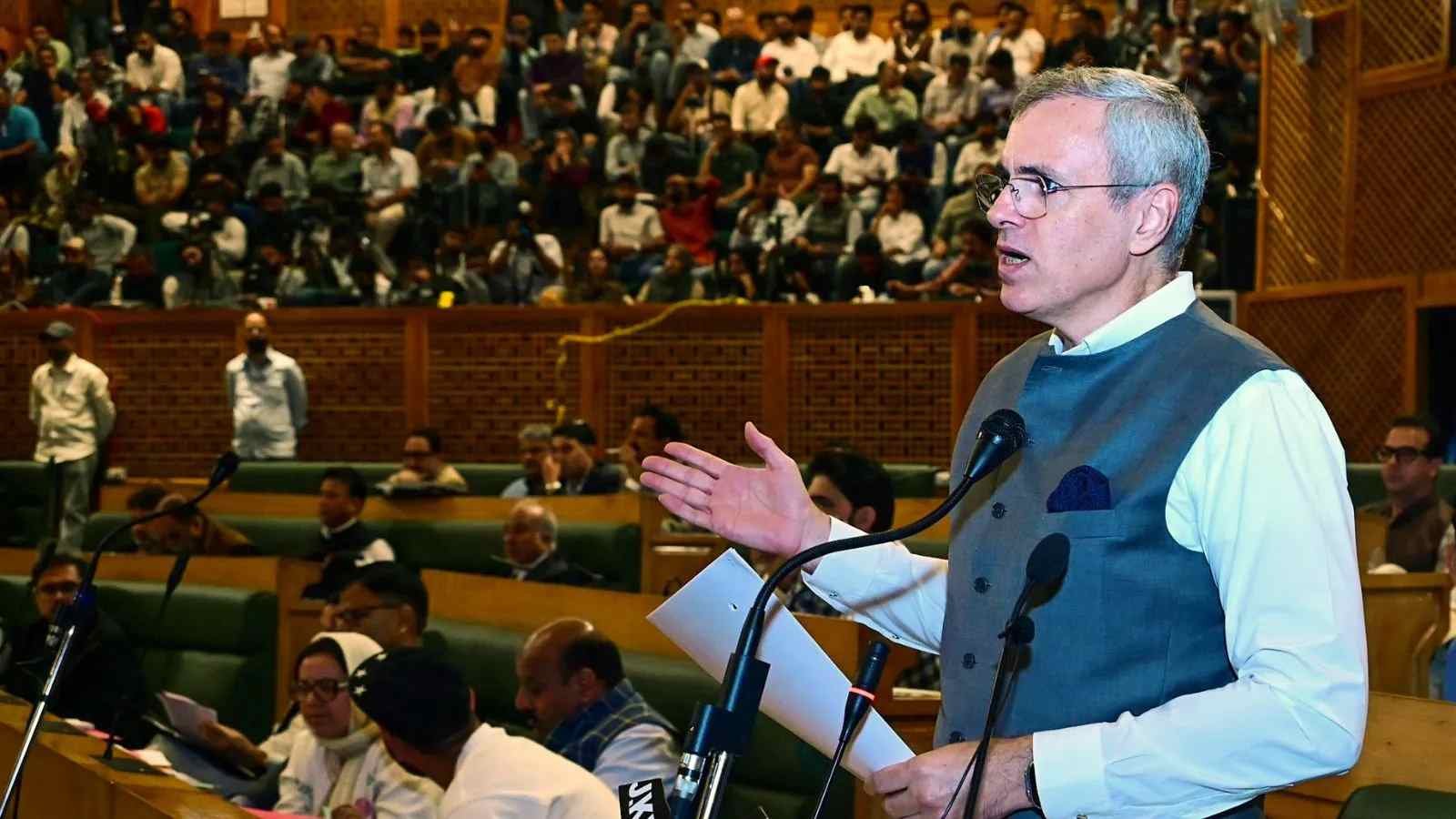
By referring to the Jammu and Kashmir Assembly's 2000 and 2024 resolutions, Omar Abdullah has pitched for the state's statehood while cornering the BJP over the question of restoration of statehood.
As Chief Minister, Omar rose in the Assembly to speak on his resolution seeking immediate restoration of full statehood to Jammu and Kashmir, citing various reasons to underline why the Union Territory urgently needed to regain its statehood.
“Mr Speaker, the absence of statehood affects us every day,” Omar said. “Did you get an opinion from the Law Department that the debate on this resolution is sub-judice and should be disallowed? I am the Law Minister. I was not even aware of this opinion. As the Law Minister, I am not aware that my Law Secretary is sending you an opinion. As the Chief Minister, I am not aware that the Chief Secretary is sending you a letter regarding my resolution.”
Key Grievances
Omar went on to flag multiple grievances, ranging from the Transaction of Business Rules still not finalised to the National Conference (NC)-led government not having control over law and order, universities, and even the Revenue and Culture Departments.
“We kept patience, but for how long?” he asked.
For the last two years of his tenure, Omar has largely adopted a reconciliatory approach, persuading the BJP-ruled Centre to restore statehood to J&K.
The resolution marked a culmination of Omar’s patience as reflected in his sharp speech.
“They (Centre) keep saying that statehood would be given at an appropriate time. Tell us how we determine that we have reached that appropriate time,” Omar asked.
“Jammu and Kashmir does not need any favour. Jammu and Kashmir does not need charity. We are not accepting alms. We are not beggars. We have been humiliated. We want an answer for this humiliation. We want justice for this humiliation… We have a right to statehood. This is not a favour from the Centre.”
Historical Context
By referring to the Assembly's 2000 and 2024 resolutions, Omar has sought to do a political tightrope – not alienating his core constituency in the Valley and parts of Jammu, while cornering the BJP over the question of restoration of statehood.
Significantly, 10 legislators moved the amendments during the debate on Omar’s resolution, all of which were later withdrawn.
Six of the MLAs were from the NC, whose amendments sought to include in the resolution the restoration of J&K’s special status under Articles 370 and 35 A from before August 5, 2019.
While Omar said he did not want to give the BJP an opportunity to oppose the statehood resolution and that “some of my friends are trapped in their (BJP) argument and are seeking vote on amendments to this resolution”, the amendments moved by the six NC legislators seemed to be a carefully calibrated move to appeal to the party’s core constituency.
The resolution was passed by voice vote amid a walkout by the slogan-shouting BJP MLAs.
Through his balancing act, however, Omar managed to secure the support of the Valley-based Opposition parties, which could not oppose the resolution in view of its political ramifications.
Even the BJP did not oppose the resolution for seeking the restoration of statehood to J&K – a demand that enjoys broad political support across the UT.
The party instead focused its opposition on Omar’s reference to autonomy in the resolution, describing it as “unconstitutional and anti-national”.
While the BJP members held their protest in the Well of the House, they did not, unlike on previous occasions, made any serious attempt to disrupt the proceedings.