‘Mirzapur The Movie’ Review: Cinematic Transition Retains Character Depth While Shifting Political Nuance

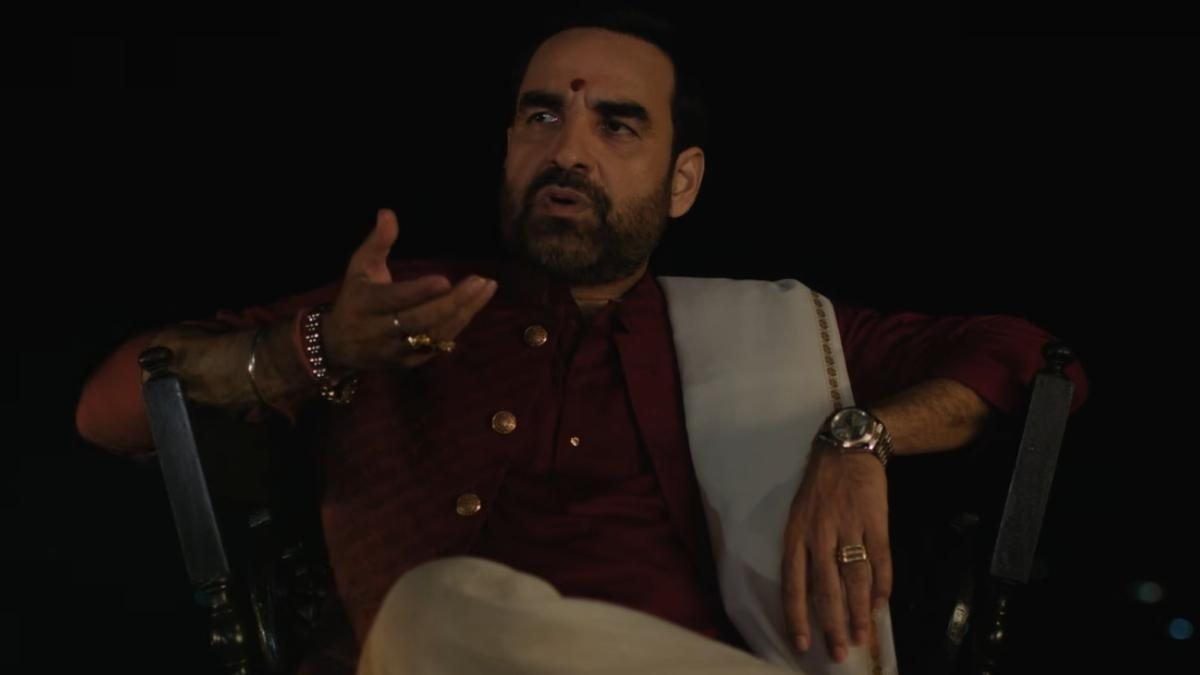
The popular OTT series Mirzapur has made its transition to the big screen with Mirzapur The Movie. Directed by Gurmeet Singh and written by Puneet Krishna, the cinematic adaptation successfully captures the mood, key moments, and character motivations of the original franchise, though it flattens some of the political nuance present in the series.
In Indian cinema, audiences often overlook a weaker plot if they connect deeply with the characters. Much like classic and contemporary films such as Ramesh Sippy’s Sholay and Aditya Dhar’s Dhurandhar, the plot of Gurmeet Singh’s Mirzapur serves as a scaffolding. The true architecture lies in its characters, brought to life by vibrant dialogues. Viewers have developed loyal bonds with these figures, staying engaged despite the plot occasionally entering generic gang-war territory.
Character Motivations and Cinematic Transition
The film opens its cinematic chapter mid-way through the first season of the original series. Within the first ten minutes, the screenplay sheds its episodic structure, transitioning smoothly into a feature film format without feeling jarring. Writer Puneet Krishna relies on the audience to connect the narrative dots back to the source material, ensuring that the core motivations of the characters remain clear and, in some cases, are spelled out with greater depth.
For instance, the role of Guddu’s mother, Vasudha Pandit (played by Sheeba Chaddha), in his psychological transformation into a gangster is made more explicit. The film also deepens the survival trajectory of Beena Tripathi (Rasika Dugal) among the Tripathi men, as well as the underlying scars behind the misplaced machismo of Munna (Divyendu). While the male characters remain trapped in cycles of destructive machismo, it is the women who drive the real undercurrents of the plot.
Sanitised Narrative and High-Stakes Dialogues
To appeal to a wider theatrical audience, the filmmakers have sanitised the narrative by reducing the profanity and overt sexual politics that characterized the OTT series. This restraint does not dilute the film's impact; instead, it sharpens the narrative through potent metaphors of the heartland.
The dialogues, filled with rustic wit, function as high-stakes psychological games where humorous words can quickly escalate into matters of life and death. The cinematic format amplifies these moments, utilizing low whispers and pregnant pauses from Kaleen Bhaiya (Pankaj Tripathi) to build tension in the theatre.
Restructuring the Political Landscape of Purvanchal
One of the most notable changes in the film is the deliberate restructuring of Purvanchal’s criminal landscape. Grounding the narrative within a specific historical window of Uttar Pradesh’s political timeline, the film bypasses the Muslim and Thakur ganglords of the region.
Instead, the power struggle is reframed as a Yadav versus Brahmin conflict for supremacy in Purvanchal politics. In this setup, the OBC group represents the political class seeking funds, while the upper-caste group leads the underworld in search of patronage. While the original series maintained a balanced representation of different caste groups, the film flattens this dynamic into a conflict of sophisticated feudalism versus crude, power-hungry interlopers, leaving the actions of rival political parties unexplored.
Performances and Technical Execution
Pankaj Tripathi delivers a strong performance as Akhanda, navigating a complex emotional matrix of dominance, fear, desire, and greed. Ali Fazal portrays Guddu as a vulnerable, passionate brute whose violence stems from emotional tempests rather than calculation. Divyendu, playing Munna, delivers effective punchlines while showcasing the vulnerable side of his unhinged character. Meanwhile, Jitendra Kumar's portrayal of Bablu is noted as less effective than Vikrant Massey's previous depiction of the character.
The integration of actor-politician Ravi Kishan brings local color and meta-context to the film. Portraying a feminist Bahubali, Kishan captures the linguistic rhythm and posture of the region, supported by Pramod Pathak as an opportunistic politician.
With a runtime exceeding three hours, some desert sequences in the second half feel stretched, and the songs and sound design take time to grow on the audience. However, the film remains an engaging experiment in bringing the franchise to theatres. Mirzapur The Movie is currently running in theatres.