Kyiv Hit by Missile Strike After Russia Signals Readiness for Peace Talks

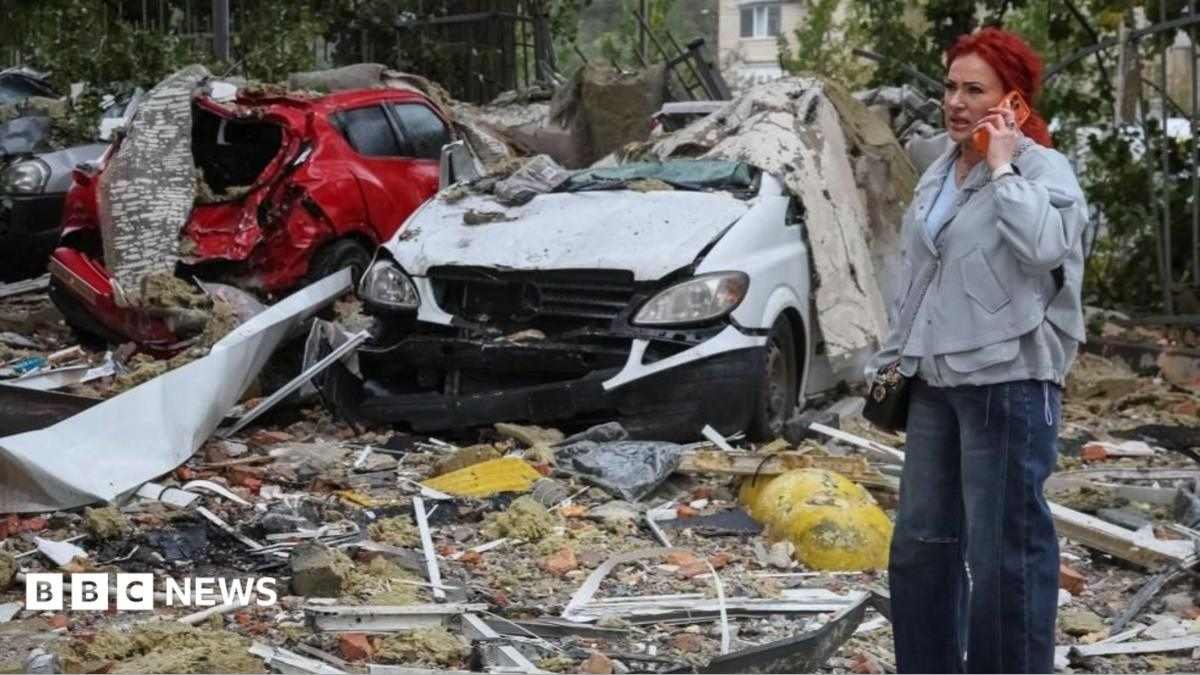
A new missile attack has targeted Ukraine's capital city of Kyiv, injuring six people and striking several houses, according to Kyiv Mayor Vitaliy Klitschko. The strike occurred hours after Russia announced it was ready in principle to resume peace talks, alongside comments from US President Donald Trump stating the world was the closest it had been to ending the war.
The military action coincided with a diplomatic initiative led by US envoys Steve Witkoff and Jared Kushner. Witkoff met Russian President Vladimir Putin in St Petersburg on Wednesday following discussions in Oslo on Monday with Ukrainian President Volodymyr Zelensky and leaders from Norway and Finland. Three-way negotiations had previously been paused in February, after which Russia intensified strikes while Ukraine faced a shortage of Western-supplied missile interceptors.
Diplomatic Proposals and Front-Line Dynamics
During the meetings, specific proposals were discussed, though details remain limited. Following the Oslo talks, President Zelensky noted that strong security guarantees for Ukraine and energy ceasefire proposals were raised. However, Putin's aide Yuri Ushakov characterized these ideas as not very useful. Ushakov suggested that a new round of talks could potentially take place around November 10 in Abu Dhabi, the capital of the United Arab Emirates, focusing on establishing a security system for both nations after the conflict ends.
Ushakov also stated that President Putin informed Witkoff that Russian forces were advancing across the front line and held a strategic initiative. This assertion is disputed by Ukraine and its European allies, who point to a virtual stalemate on the front. Meanwhile, Russia currently controls approximately 20 percent of Ukrainian territory following its full-scale invasion launched in 2022.
Regarding potential terms, President Zelensky indicated in an interview with Fox News that he would accept a deal to freeze the war along the present front line. He described this minimum requirement as a ceasefire or an agreement to freeze the conflict and stop killings, adding that formal security guarantees could be negotiated subsequently.
Reactions and Inter-Governmental Tensions
US special envoy Witkoff described the recent discussions in St Petersburg as constructive. Participating via video link, Kushner stated that significant effort remains required, but a real opportunity exists to move beyond the war and build a framework for lasting peace, security, and prosperity.
The diplomatic push occurs amid friction between Washington and Kyiv. President Trump has publicly suggested that Ukraine needs new leadership to negotiate on its behalf. He has also linked Ukrainian attacks on Russian oil refineries to rising global fuel prices during the US-led war on Iran. Trump faced criticism from Democratic and Republican lawmakers after lifting sanctions to allow Russia to release diesel into global markets, despite having signed legislation authorizing sanctions and tariffs on importers of Russian energy weeks earlier.
Tensions also surfaced over intelligence and technology access. Kyiv recently accused Washington of withholding critical intelligence on incoming Russian ballistic missile launches, a claim rejected as scandalous by US Secretary of State Marco Rubio; Zelensky later stated that intelligence sharing was functioning. Additionally, Ukrainian military officials reported speed restrictions on Elon Musk's Starlink satellite network that impacted drone operations against Russia. US officials denied requesting any slowdown, prompting a bipartisan group of US senators to call for an investigation.
Release of American Citizen
Prior to the meeting between Putin and Witkoff, Russia released Stephen Hubbard, a 74-year-old US citizen who had received a prison sentence of nearly seven years for allegedly fighting on behalf of Ukraine. President Trump confirmed that no prisoner swap was involved in Hubbard's return.
When questioned about Witkoff referring to Putin as a humanitarian for releasing Hubbard, US Vice-President JD Vance defended the envoy's diplomatic role, emphasizing the outcome of bringing an American citizen home to his family.