
Israel and Turkey Enter Dangerous Strategic Rivalry Over Post-Assad Syria

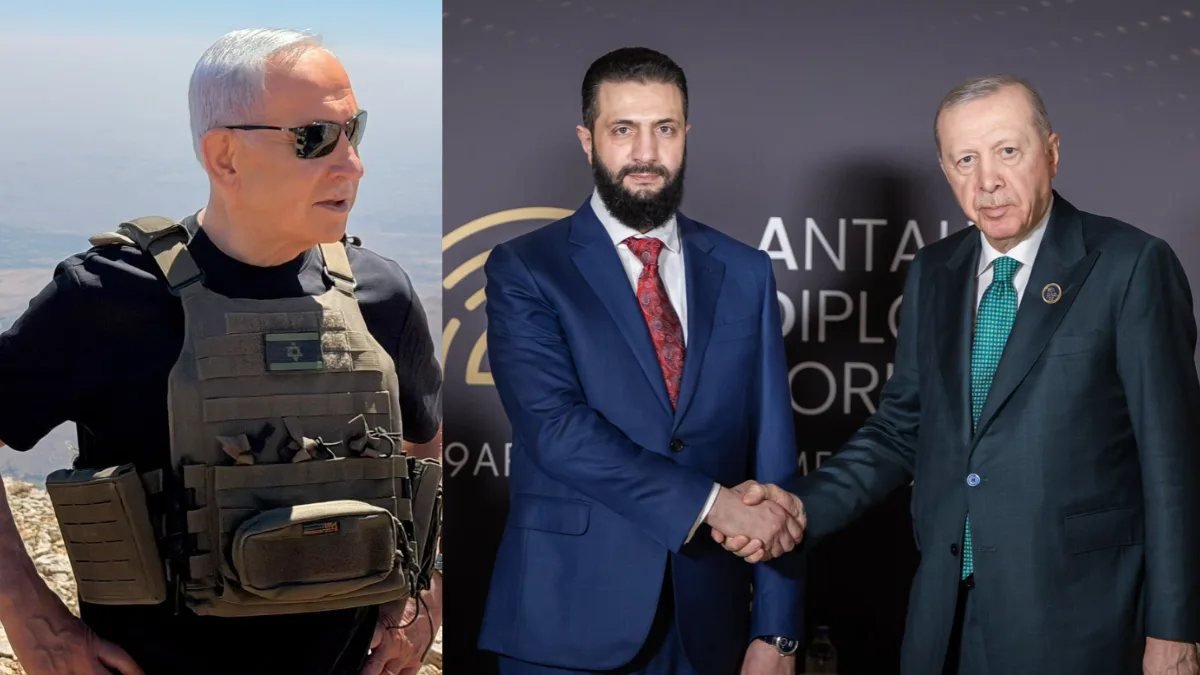
The relationship between Israel and Turkey has entered one of its most dangerous phases in decades. What began primarily as a dispute over the war in Gaza has increasingly evolved into a broader contest for regional influence, particularly in post-Assad Syria. In recent weeks, Israel has carried out airstrikes on Syrian military infrastructure, driven by concerns over Turkey's expanding military presence in the country. While this has not escalated into an open war, the two nations are increasingly operating as strategic competitors in West Asia.
Historically, Israel and Turkey shared unusually close ties. Turkey was the first Muslim-majority nation to formally recognise Israel, leading to years of substantial cooperation in military, intelligence, and economic sectors. However, relations deteriorated sharply under Turkish President Recep Tayyip Erdoğan, particularly following Israeli military operations in Gaza and the 2010 Mavi Marmara incident. Although diplomatic ties were temporarily restored in 2022, the outbreak of the Gaza war following the October 7, 2023, attack by Hamas dismantled the rapprochement.
The Impact of the Syrian Transition
Following the October 7 attacks, Turkey emerged as one of Israel's most vocal critics. President Erdoğan has maintained political relations with Hamas and strongly supported the Palestinian cause, while Israel views Ankara's regional ambitions with growing suspicion. In 2024, Turkey suspended all trade with Israel, stating that the restrictions would remain in place until Israel permits humanitarian assistance into Gaza. For Erdoğan, the Gaza conflict serves as both a key foreign-policy position and a significant domestic political issue. This has led to highly hostile personal exchanges between Erdoğan and Israeli Prime Minister Benjamin Netanyahu, featuring accusations of genocide from Ankara and counter-accusations of antisemitism and support for Hamas from Israel.
Beyond Gaza, the geopolitical landscape shifted dramatically following the fall of Syrian President Bashar al-Assad in December 2024. This transition transformed the regional balance of power, turning Syria into a new arena of competition. Turkey has become a principal external backer of the new Syrian government led by President Ahmed al-Sharaa, leveraging its substantial military influence in northern Syria to help the new authorities consolidate control. Meanwhile, Israel has focused on its own security objectives in southern Syria, aiming to prevent hostile forces from approaching its northern border, particularly near the Golan Heights.
Military Overlap and the August 2026 Strike
This alignment has brought Israeli and Turkish military interests into direct overlap inside Syria. Unlike previous diplomatic disagreements over Gaza, Israel's concerns now focus on Turkey's formidable conventional military capabilities. Turkey possesses a large army, sophisticated air-defence systems, NATO-standard military infrastructure, and extensive operational experience in Syria, alongside growing political influence in Damascus. Israeli security analysts worry that a permanent Turkish military infrastructure in Syria could eventually restrict Israel's operational freedom of action in the region.
These concerns escalated significantly in August 2026, when Israel targeted the Abu al-Duhur airbase in northern Syria, located near the Turkish border. Israel reportedly informed Washington that the strike was intended to prevent a Turkish military buildup at the facility. This operation marked a notable shift, as Israel was no longer targeting Iranian or jihadist assets, but was instead acting directly to limit Turkish military entrenchment. Analysts note that Israel's preferred strategy is to prevent such entrenchment through targeted actions rather than engaging in a direct military confrontation with Turkey, which is geographically larger, demographically superior, and a NATO member.
The Eastern Mediterranean and New Alliances
The strategic rivalry has also expanded into the eastern Mediterranean. Israel has strengthened its security and defence cooperation with Greece and Cyprus. This development directly conflicts with Turkey's long-standing disputes with Greece over maritime boundaries, energy resources, and Cyprus. Reports indicate that Ankara is preparing for various scenarios, ranging from diplomatic crises to potential military confrontations, as Israel's defence ties with Greece expand. Consequently, the dispute has evolved from an Arab-Israeli issue into a broader conflict affecting the eastern Mediterranean balance of power.
Additionally, Turkey has joined the Makkah Joint Defence Agreement, commonly referred to as the "Islamic NATO," alongside Saudi Arabia and Pakistan. Other Muslim-majority nations, including Egypt and Bangladesh, are reportedly considering joining the alliance. This development comes as Israeli officials and security analysts increasingly discuss Turkey in strategic terms previously reserved for Iran, with some identifying Ankara as the next major regional challenge.
Factors Restraining Direct Conflict
Despite the heightened tensions, a direct war between Israel and Turkey remains unlikely in the near term due to the immense costs involved. Several factors encourage restraint on both sides. Turkey's status as a NATO member and Israel's close strategic alliance with the United States act as significant deterrents. Furthermore, neither country shares a direct territorial dispute that would require physical occupation, and both face more pressing security concerns elsewhere. A direct conflict would also severely destabilise Syria and the wider eastern Mediterranean region.
However, the risk of indirect confrontation remains high. A potential escalation ladder could involve Turkish military deployments in Syria triggering Israeli airstrikes, leading to a Turkish response and subsequent diplomatic escalation. A confrontation would also present an extraordinary political challenge for NATO and the United States, as NATO's Article 5 does not automatically trigger collective defence in all conflict scenarios. Washington would likely seek to mediate any such dispute to prevent further escalation, reflecting the changing geopolitics of the Middle East and the evolving roles of external powers like Europe, the United States, and Bharat.