India's Right to Protest: A Fundamental Freedom

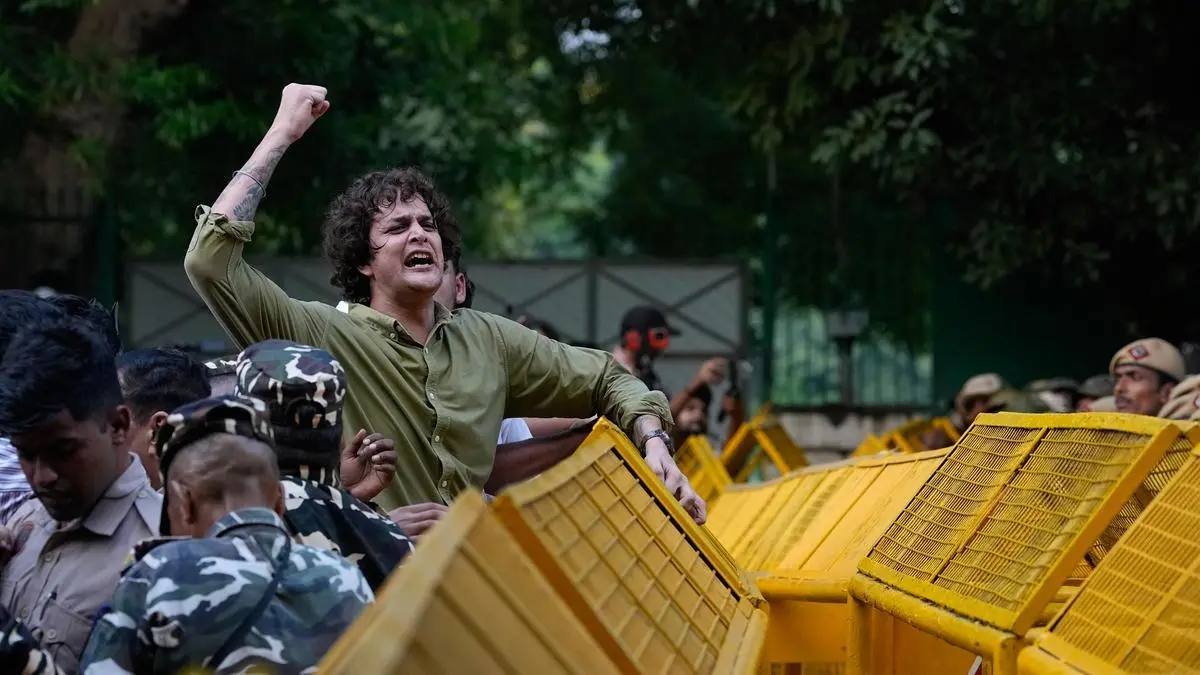
Asking the government for permission to criticise the government turns a fundamental right into a favour. The Constitution sets no such condition.
Article 19(1)(b): A Right to Assemble Peaceably
Article 19(1)(b) of the Constitution guarantees every citizen the right to assemble peaceably and without arms. It does not say “with the approval of the district administration” or “subject to the mood of the officer on duty”. The only conditions in the clause itself are that the assembly be peaceful and unarmed.
A gathering that meets both is exercising a right, not seeking a favour. The Supreme Court has said as much more than once, in cases such as Ramlila Maidan Incident, In Re (2012), Mazdoor Kisan Shakti Sangathan v. Union of India (2018), and Kameshwar Prasad v. State of Bihar (1962).
The test was never whether the authorities were pleased. It was whether the gathering was peaceful. Permission versus intimation is not a technicality. Intimation is a courtesy: telling the police that a procession will pass along a particular road at a particular hour, so that traffic can be diverted, ambulances routed, and marchers kept safe.
Permission is different. It carries the power of refusal, and that power is likely to be used against protest when the state is the one being protested against.
Reasonable Restrictions and Proportionate Regulation
Article 19(3) allows the state to impose reasonable restrictions in the interests of the sovereignty and integrity of India or public order. The operative word is “reasonable”. A restriction must be proportionate and backed by written reasons that a court can examine.
It can regulate the time, place, and manner of a protest. It cannot be used to turn regulation into prohibition. Courts have repeatedly said that such powers must be exercised with application of mind, for a limited time, and on material that can withstand review.
A peaceful gathering does not become an “unlawful assembly” because the police paste a notice. “Unlawful assembly” has a legal meaning that depends on the object and conduct of the crowd, not on how inconvenient it is.
India's Freedom Struggle and the Legacy of Dissent
India's freedom struggle was built on dissent. People signed petitions, marched, went on hunger strikes, waved flags, and organised processions in the face of a colonial police force that charged with lathis.
Many did not wait for a magistrate’s signature before marching. The makers of the Constitution wrote the right into Part III, beyond the reach of any ordinary majority.
Protesters owe their fellow citizens a few things: to stay peaceful, to respect the safety of others, and to inform the authorities so that suitable arrangements can be made.
The state’s obligation is simpler. It must recognise that citizens have the right to protest peacefully, and that no government department or other authority must grant them permission to do so.
Nearly every party that governs in India has sat in opposition, and every opposition hopes to govern. A protest need not be comfortable. The question for a republic is whether its citizens must ask permission to be heard.
Karanveer Singh is a practising advocate at the Punjab and Haryana High Court in Chandigarh. He is a founder of South Asian Law Chambers, a law firm based in Chandigarh and Delhi.
Also Read | Modi opens war on the people, and the Supreme Court looks on
Also Read | Jantar Mantar protest: CJP leaders detained, Delhi sealed
IIT Bombay suicide and the caste factor
Key Questions & Insights