
Houthi Missile and Drone Attacks Hit Riyadh Airport and Eastern Saudi Arabia

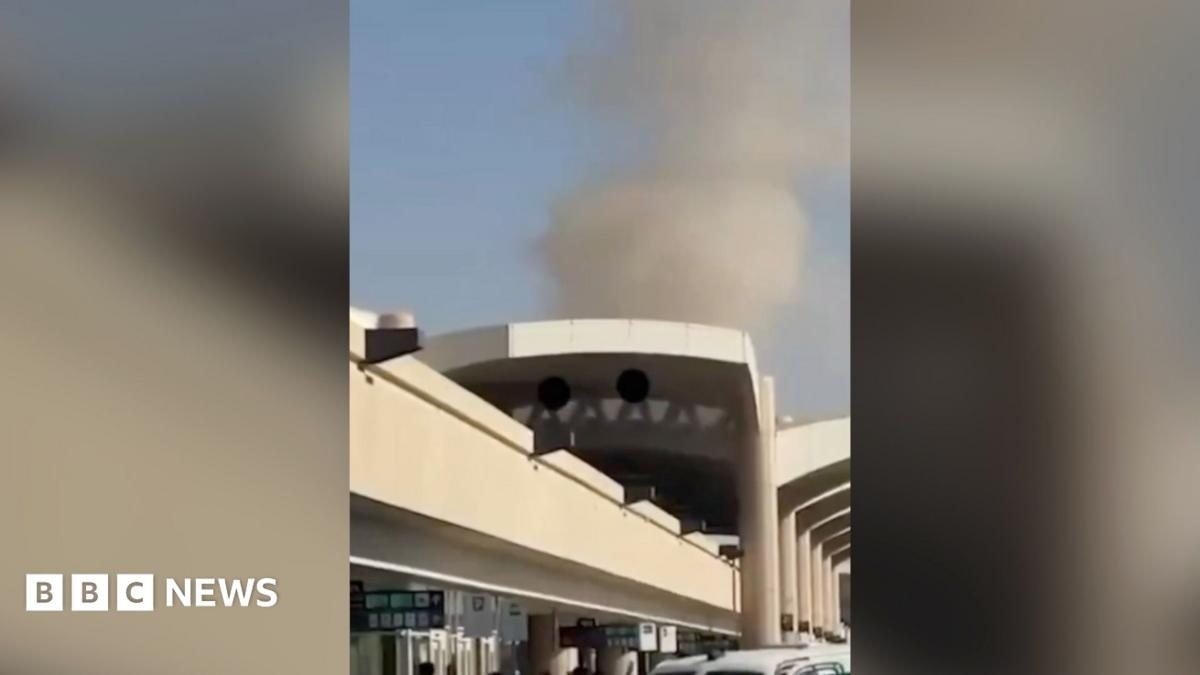
An international airport in the Saudi capital of Riyadh has been hit by a second strike in as many days, according to official reports. A Saudi military spokesman confirmed that a projectile struck King Khalid International Airport on Sunday, causing a fire in Passenger Hall No 4. Civil aviation authorities in Saudi Arabia confirmed that injuries were recorded during the incident.
The Sunday strike follows an attack at the same airport a day earlier that left 13 people dead and injured 308 others. The Indian embassy in Saudi Arabia reported on Sunday that an Indian national died after succumbing to injuries sustained in Saturday's attack. The Saudi civil aviation authority detailed that the fatalities from Saturday's strike included four Saudi nationals, two individuals from Bangladesh, and one person each from the United States, Jordan, Palestine, Syria, Sudan, and Egypt.
Houthi Group Claims Responsibility and Warns Aviation Sector
The Houthi movement in Yemen claimed responsibility for the strikes, stating that they targeted the Riyadh airport using a combination of ballistic missiles, cruise missiles, and drones over a 24-hour period. Houthi military spokesman Brig Gen Yahya Saree stated that the group also conducted attacks against oil facilities and Dammam airport in eastern Saudi Arabia.
Saree vowed that the group would continue escalating operations deep inside Saudi Arabian territory. He issued a warning to airlines and passengers against using Saudi airspace and airports, stating that all airports in the country are considered potential targets, with the exception of those located in the holy cities of Mecca and Medina. The Houthis stated that their actions are in response to Saudi Arabia's support for Yemeni government forces and an alleged air strike on the airport in Sanaa.
Military Response and International Reactions
Maj Gen Turki al-Maliki, spokesman for the Saudi-led military coalition, stated on Sunday that air defence systems had intercepted a missile near the airport in Riyadh. He added that emergency authorities were managing the fire caused by an unknown projectile at Passenger Hall No 4. The coalition described the deadliest strike on Saturday as a war crime and vowed to respond.
International political figures have responded to the escalation. United States President Donald Trump stated that the US would make a decision and move quickly regarding potential strikes against the Houthis. US Secretary of State Marco Rubio condemned the attacks while confirming the death of a US citizen. UK Defence Secretary Wes Streeting suggested that the UK could potentially offer increased support to Saudi Arabia, while UK Foreign Secretary Ed Miliband expressed dismay over the strikes.
Regional Escalation and Conflict Background
Diplomatic and security advisories have been updated following the incidents. The UK Foreign Office issued guidance advising against all travel to specific regions of Saudi Arabia, including areas within 10 kilometres of the Yemeni border, while several Western embassies issued travel warnings to their citizens residing in or visiting the region.
In Yemen, Houthi-run Al Masirah TV reported that Saudi forces conducted an air strike on Sanaa International Airport in the country's capital. Saudi authorities have not confirmed this claim. Meanwhile, Abdullah Al-Alimi Bawazir, vice-president of Yemen's internationally recognised government, called on regional and international partners to take decisive action.
The current strikes represent a series of consecutive attacks on Saudi infrastructure. Riyadh airport was previously struck on Thursday in an attack that killed three Saudi nationals, an action for which the Houthis claimed responsibility using cruise missiles. Deadly attacks were also recorded at airports in Abha and Riyadh during the preceding two days.
The intensification of violence follows the collapse in July of a temporary ceasefire brokered in 2022 between Houthi forces and the Saudi-led coalition. The situation escalated further when Houthi fighters seized control of strategic portions of the Red Sea coast, prompting Saudi air strikes before Yemeni pro-government forces reported securing those regions. The Houthis currently administer roughly one-quarter of Yemen's territory, encompassing about 80 percent of the country's total population.