
Government Ready to Refer FCRA Amendment Bill to Joint Parliamentary Committee Amid Pushback

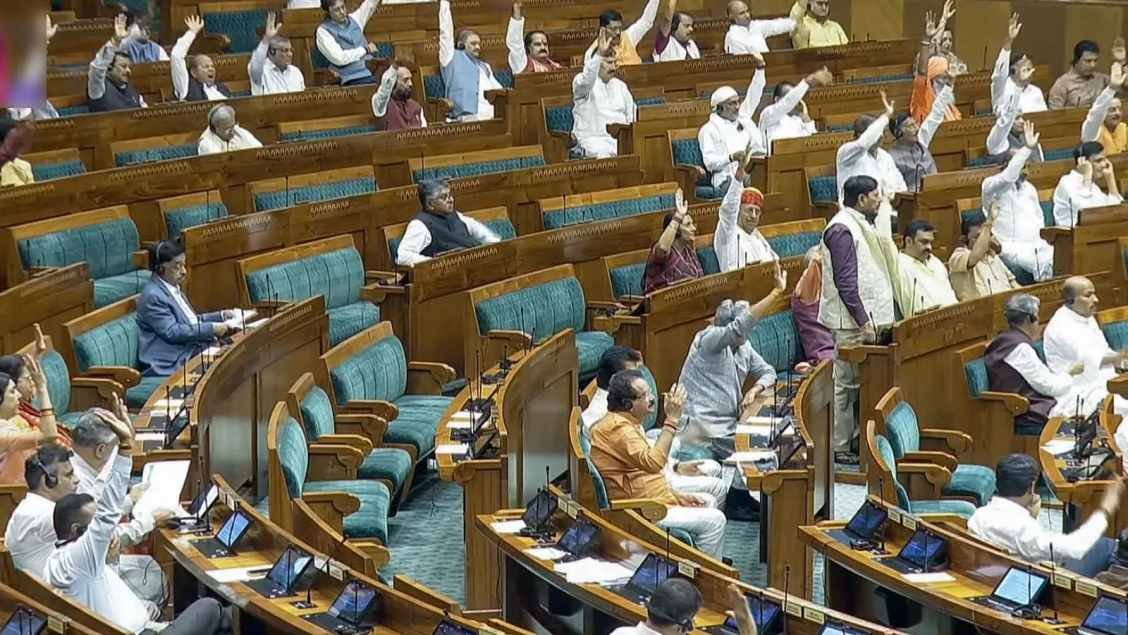
The Government of India is prepared to refer the Foreign Contribution (Regulation) Amendment Bill, 2026, to a Joint Parliamentary Committee (JPC) following pushback from opposition parties, civil society organisations, and religious bodies. Sources stated that this move is aimed at breaking the current deadlock in Parliament and addressing concerns regarding the proposed asset-vesting rules.
The opposition has demanded the complete withdrawal of the Bill. Meanwhile, civil society and religious organisations, particularly Church bodies, have expressed apprehension that the new rules could be used to penalise past investments. Representatives from several Church bodies have met with Union Home Minister Amit Shah in recent days to voice these concerns.
A Union Minister defended the legislation, stating that there is nothing in the Bill to oppose and that it is not directed against any specific community. However, the minister confirmed that the government is willing to refer the Bill to a JPC for further deliberation to resolve the standoff before the monsoon session of Parliament concludes on August 13.
Opposition Demands and Parliamentary Standpoint
Opposition parties, including the Congress, Trinamool Congress (TMC), Left parties, and the DMK, have consistently demanded the withdrawal of the Bill. Despite this stance, sources indicate that these parties would agree to refer the legislation to a JPC as a compromise.
A CPM MP criticised the focus of the Bill, arguing that the government is attempting to regulate the organisations receiving foreign contributions rather than regulating the use of the contributions themselves. Describing the provisions as draconian, the MP stated that while they prefer a complete withdrawal, they would accept a referral to a JPC.
The DMK and other regional representatives have also actively opposed the Bill. DMK MP P Wilson recently met with Home Minister Amit Shah alongside a delegation of Church leaders to present a memorandum. The memorandum highlighted concerns that the Bill's provisions could adversely affect the Christian community and requested either its withdrawal or its reference to a JPC. Mizoram Chief Minister Lalduhoma also met with Shah to convey similar concerns from the Christian community in his state.
An AAP MP pointed out that the government's defense—that only a small fraction of foreign contributions go to Christian non-governmental organisations—ignores the long-term impact of the legislation. The MP noted that any law passed by Parliament will outlive the current administration and carry far-reaching consequences.
The Role of a Joint Parliamentary Committee
A JPC is an ad hoc committee established to examine a Bill in detail. Unlike a Select Committee, which is formed by and consists of members from only one House of Parliament, a JPC includes members from both the Lok Sabha and the Rajya Sabha. The composition of a JPC is decided through motions adopted by both Houses.
While the recommendations of a JPC are not legally binding on the government, they carry significant parliamentary weight. The committee has the authority to examine a Bill clause by clause, hear testimonies from government officials and stakeholders, gather evidence, and suggest amendments. Other major legislations recently referred to a JPC include the Waqf (Amendment) Bill, the Personal Data Protection Bill, and the 'One Nation, One Election' Bill.
Political Context and Outreach Efforts
The government's willingness to consider a JPC referral is also linked to political dynamics in southern India. The Bharatiya Janata Party (BJP) has been actively working to expand its electoral presence in Kerala and Tamil Nadu, where building relationships with the Christian community is seen as crucial for future electoral success.
Additionally, the timing of the decision coincides with the BJP's efforts to secure the DMK's support for an upcoming delimitation Bill. Although the ruling coalition possesses the necessary numbers to pass the FCRA Bill in Parliament, sources indicated that the government prefers to avoid passing the legislation without a proper discussion.
Key Provisions and Asset-Vesting Rules
The Foreign Contribution (Regulation) Amendment Bill, 2026, proposes to insert a new Chapter IIIA into the existing FCRA framework. This chapter outlines the provisional and permanent vesting of foreign contributions, as well as assets created from them, into a government-designated authority under specific circumstances.
A major point of concern is the concept of "cessation" of an FCRA certificate under Section 14B. A certificate is deemed to have ceased if an organisation fails to apply for renewal, if its renewal application is rejected, or if the certificate expires. Under Section 16A, the assets and foreign contributions of such organisations would provisionally vest in a Designated Authority, which can take possession and manage the organisation's activities if deemed in the public interest.
If the organisation secures a renewed or restored certificate within a specified period, the assets will be returned. Otherwise, the assets will permanently vest in the authority. Permanently vested assets can be transferred to government departments, sold, or credited to the Consolidated Fund of India. For places of worship, the authority must ensure that the religious character is maintained during management.
Furthermore, the Bill covers entire assets even if they were only partially funded by foreign contributions. While organisations can apply to recover the domestic portion of the asset, the entire property initially vests with the authority. This has raised concerns for institutions like schools and hospitals built using mixed funding. Section 16B also introduces retrospective application, raising fears that past lapsed registrations could be targeted.
The government maintains that these amendments are necessary to plug administrative gaps and prevent the misuse of assets when an organisation's registration is cancelled, surrendered, or ceases to exist.