Germany's Far-Right AfD Projected for Historic Victory in Saxony-Anhalt State Election

Germany's far-right Alternative for Germany (AfD) is heading toward a major victory in the eastern state of Saxony-Anhalt, according to initial projections. The party is projected to win a record 44% of the vote, placing it far ahead of its mainstream rivals, including the conservative Christian Democratic Union (CDU), which is projected to receive between 17.8% and 18.4%.
While it remains unclear whether the AfD will secure enough seats to take full control of the state government, party leaders have already declared a mandate to govern. Ulrich Siegmund, the AfD's leader in Saxony-Anhalt, described the projected outcome as "sensational" and stated that the party wants to begin governing as soon as possible.
No far-right party has won control of a German state since World War Two. Achieving power at the state level would grant the AfD significant authority over local policing, education, and cultural policy. The state of Saxony-Anhalt has a population of 2.1 million, and its local AfD branch is classified as "right-wing extremist" by domestic intelligence—a designation that Siegmund rejects.
A Watershed Moment and International Attention
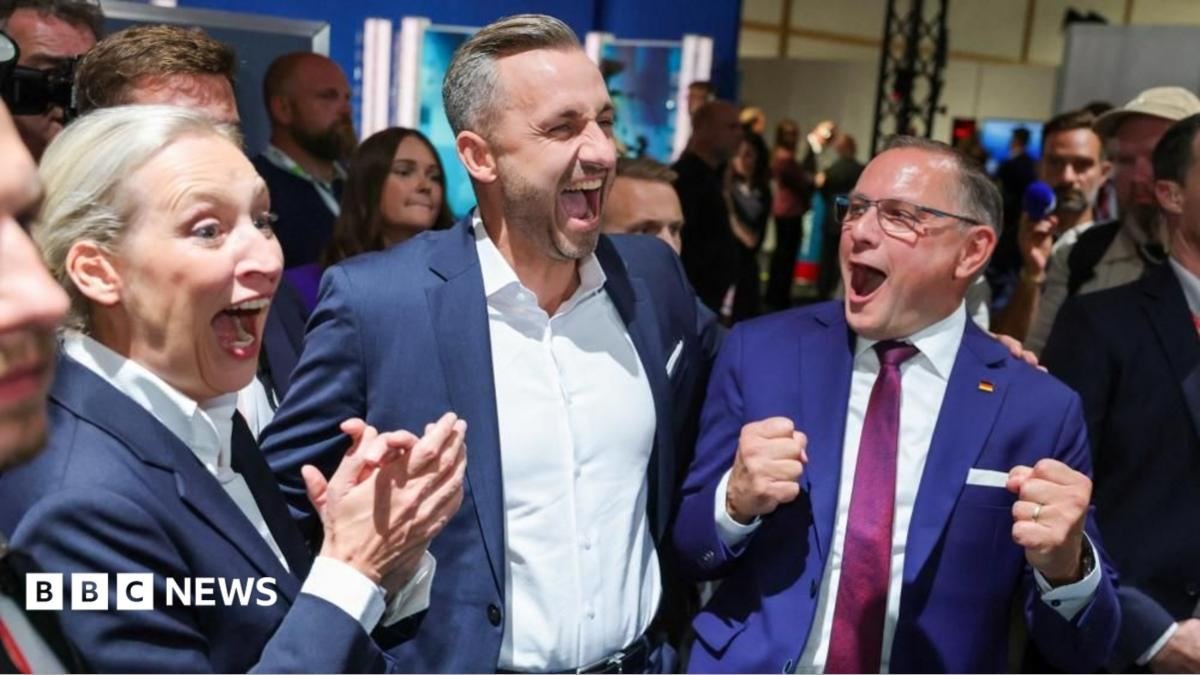
The projected results exceeded earlier opinion polls, bringing celebration to AfD supporters and national leaders Alice Weidel and Tino Chrupalla. Political opponents and commentators have described the outcome as a watershed moment and a break with the past. Reflecting the significance of the event, Germany's main television channel, Das Erste, cancelled its scheduled broadcast of the crime drama Tatort to focus on the implications of the vote.
Addressing his supporters, Siegmund emphasized the national implications of the state election, declaring that the result was a self-confident signal for the whole of Germany. The election also attracted international commentary, with former US President Donald Trump sharing a screenshot of the television projections on his Truth Social platform.
Russian presidential envoy Kirill Dmitriev subsequently shared Trump's post, praising what he termed a "historic win for the pragmatic AfD." Dmitriev had previously described the Russia-friendly party as "the party of hope and reason, co-operation truth and hope for Germany." The party has also previously received backing from US Vice-President JD Vance, who endorsed the AfD ahead of Germany's federal election last year, drawing criticism in Germany for political interference.
Coalition Dynamics and the Parliamentary Threshold
The AfD's path to forming a government depends on the final seat distribution, which hinges on whether smaller parties clear the 5% threshold required to enter the state parliament. A key factor is the performance of the populist left-wing party BSW. If BSW fails to enter parliament, the AfD's prospects of securing a majority will increase. If BSW succeeds, the AfD is projected to take 39 seats in the 83-seat legislature.
Siegmund has stated he will not lead a minority government, though the AfD's national leadership views it as a viable option. Mainstream political parties have historically maintained a "Brandmauer," or firewall, refusing to enter coalitions with the AfD. However, BSW has offered to co-operate with the AfD on certain issues if it enters the state parliament.
Sven Schulze, the CDU's leader in Saxony-Anhalt, conceded victory and acknowledged that his party would have to address the result, describing the election campaign as extremely tough and intensive. Meanwhile, the centre-left Social Democratic Party (SPD), which governs nationally alongside the CDU, called the outcome "truly dramatic." SPD national leader Lars Klingbeil described the result as a clear "signal to Berlin" that the federal government would hear.
Voter Turnout and Local Policy Concerns
Voter turnout in the state was high, reaching an estimated 78%. At the AfD's election night headquarters in Magdeburg, supporters cheered as projections appeared on screen and later sang the national anthem. Local voters cited safety and economic concerns as key reasons for their support. One voter, Ollie, described the AfD as "a party for the working people," while another voter, Bert, expressed fear that safety was eroding for his family.
The AfD, which is openly pro-Russia and anti-migration, currently leads national opinion polls ahead of Chancellor Friedrich Merz's ruling conservatives and the SPD, with its strongest support located in eastern Germany. The party also won the 2024 state election in neighbouring Thuringia but was unable to secure enough seats to form a government.
Among the AfD's controversial proposals is a plan for "remigration," which is widely understood to mean mass deportations of migrants, though the party states it applies to criminals and those residing in the country illegally. While a state government would not have the power to implement such deportations, it would hold substantial local authority. The party has previously criticized the Bauhaus school of design in Dessau—which was closed by the Nazis in 1933—calling it "the dead-end of modernism," leading to accusations of using language reminiscent of the Nazi era.
The projected election results have raised concerns among community leaders. Charlotte Knobloch, the 93-year-old Holocaust survivor and head of the Jewish community in Munich and Bavaria, expressed deep concern over the outcome, stating that she found it difficult to recognize her homeland and calling on mainstream parties to act against the decline.