
General Strike in Spain Triggers Clashes in Barcelona Over Housing Costs

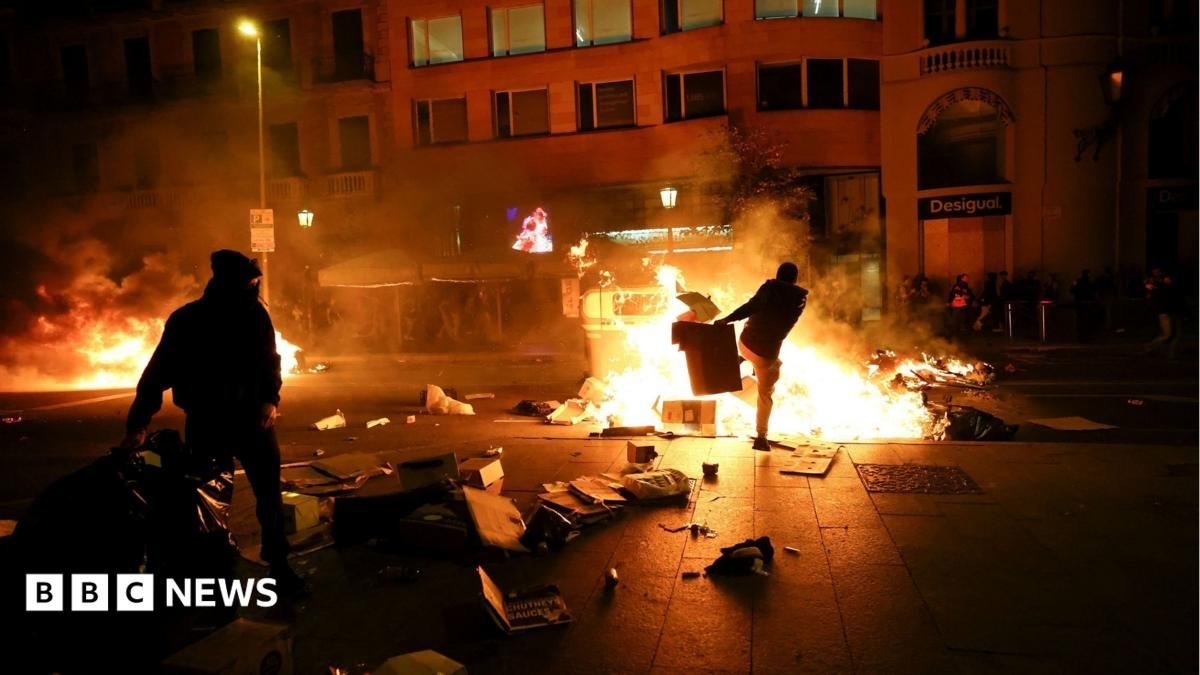
Clashes broke out between police and groups of protesters in Barcelona after tens of thousands of people participated in Spain's first general strike in 14 years. Called by the country's main trade unions, the strike focused on the rising cost of living and affordable housing, causing widespread disruption to public transport and public services across Spain.
Organisers reported large turnouts, with approximately 120,000 people demonstrating in Madrid and over 50,000 turning out in Barcelona. Pepe Álvarez, head of the UGT labour union, described the participation as massive, while Unai Sordo of the CC OO union called the turnout very significant. Spaniards are scheduled to vote in parliamentary elections on November 29.
Disturbances and Disruption in Major Cities
During Wednesday evening in Barcelona, a heavy police presence was established in the city centre, with riot officers deploying helmets and shields. Disturbances occurred in Passeig de Gràcia near Plaça de Catalunya, where small fires burned in the streets. Masked individuals set fire to rubbish bins, smashed shop windows, and threw fireworks at police, prompting officers to fire tear gas. Local media reported that shops, including a Lego store, were looted, and protesters attempted to enter an Apple Store.
Earlier in the day, traffic was halted on several major roads around Madrid and Barcelona. The interior ministry confirmed that dozens of people were arrested across various incidents, while reports indicated that estate agencies experienced attacks on their offices. Disruption was also reflected in industrial energy usage; power consumption dropped by 7.5 percent during the early hours of Wednesday, according to data from operator Red Eléctrica, compared to a drop of more than 15 percent during the country's last general strike in 2012.
Catalyst and Economic Context
The general strike follows widespread anger over housing conditions, triggered recently by the eviction of 87-year-old Maricarmen Abascal from her Madrid flat of seven decades. Abascal, whose rent had tripled under new landlords, died in hospital weeks after the eviction. Gonzalo Álvarez, a 27-year-old sales worker who volunteers for a housing union, noted that her treatment served as the spark for the widespread demonstrations.
Housing affordability remains a central issue in the capital. Data from property portal Idealista shows the monthly average rent for a 50-square-metre apartment in Madrid reached €1,170 ($1,300) in October, against an average gross monthly salary in Spain of about €2,460. Demonstrators noted that rising living costs alongside flat wages have made rent and property ownership increasingly unsustainable for workers.
Political Reactions Ahead of Parliamentary Polls
The general strike comes after Socialist Prime Minister Pedro Sánchez called snap elections following parliament's failure to approve his housing reform plan. In a departure from typical government responses to industrial action, Sánchez and his ministers expressed support for the strike. Sánchez praised historical labour achievements on social media and defended the workers' right to strike during a Spanish television appearance.
Conversely, the opposition conservative People's Party (PP) criticized the strike as an attempt by the government to gain electoral advantage. PP leader Alberto Núñez Feijóo called the strike nonsense and directed criticism at union leaders. PP spokesman Miguel Tellado accused the administration of using the strike to sway voters ahead of the November 29 election, in which the PP currently leads in public opinion polls.
Business representatives also expressed opposition to the industrial action. Miguel Garrido, vice-president of the CEOE business association, argued that the strike was motivated by political factors rather than labour issues, stating that businesses have little control over housing prices.