Gen Z Protests Challenge Political Landscape Following Education Minister's Resignation

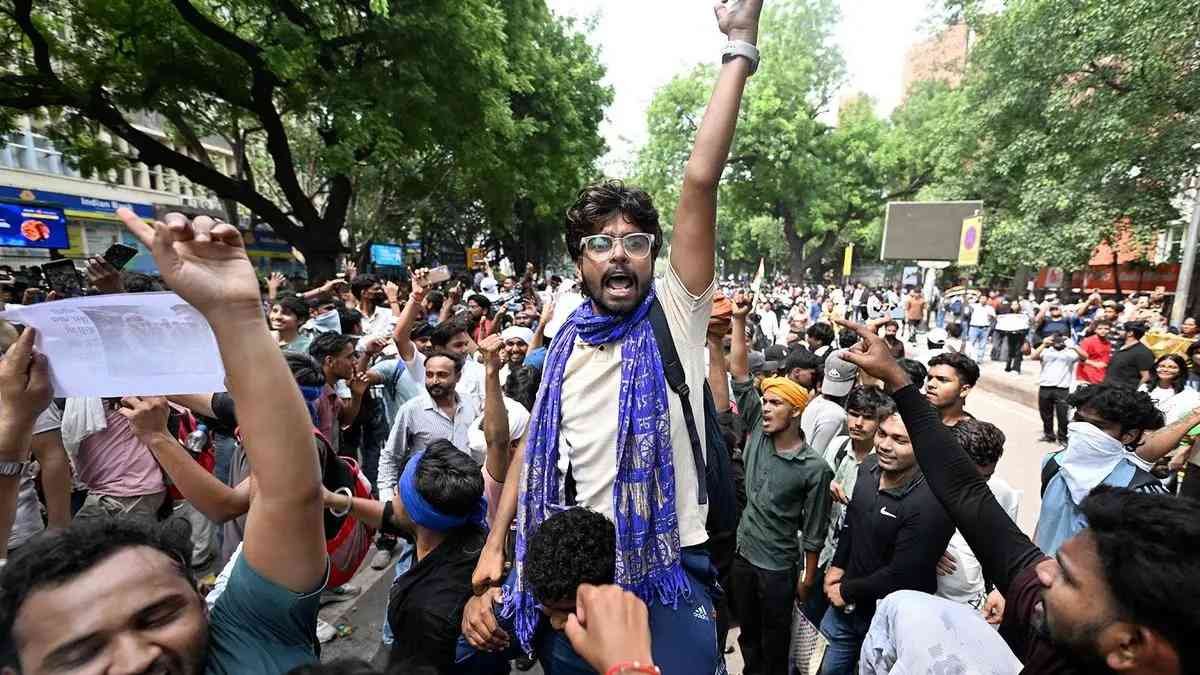
A wave of youth-led activism, marked by protests under the banner of the Cockroach movement, has sparked significant discussion regarding the impact of Gen Z street mobilisations on mainstream electoral politics in India. The demonstrations previously led to a major political development on July 25, 2026, when supporters of the Cockroach Janta Party (CJP) celebrated the resignation of Union Education Minister Dharmendra Pradhan at Jantar Mantar in New Delhi following widespread protests over National Eligibility cum Entrance Test (NEET) examination irregularities and question paper leaks.
Despite forcing the resignation of a Union Cabinet Minister, the youth movement faced immediate hurdles in converting street-level momentum into campus electoral success. In the subsequent Delhi University Students Union (DUSU) elections, the Akhil Bharatiya Vidyarthi Parishad (ABVP), the student wing of the Bharatiya Janata Party (BJP), secured three out of the four contested seats. Furthermore, the movement's influence did not yield visible gains for opposition parties in recent state byelections.
Expansion Beyond Student Demands and Electoral Distance
The movement has nevertheless expanded its reach beyond its initial student base. Broader public mobilisations have seen participation from trade unions, farmers, gig workers, and unemployed youth joining forces alongside opposition political groups, resulting in some of the largest demonstrations seen in the capital in recent years.
The CJP has maintained that it is not a registered political party and does not intend to contest elections directly. According to the movement's stance, its primary focus remains on holding public officials accountable rather than entering the electoral fray. Following the resignation of the Union Education Minister, the movement has directed its demands toward the removal of Chief Election Commissioner Gyanesh Kumar over allegations of conduct bringing disrepute to the constitutional office.
The organisation maintains that its long-term objective involves reforming the national education system, addressing both physical infrastructure deficits and pedagogical content. Activists contend that while established political parties in the opposition INDIA bloc may campaign on issues raised during the protests, electoral consolidation remains the responsibility of political parties rather than non-political student movements.
Police Action and Administrative Response
The ongoing demonstrations have drawn increased scrutiny over the response of law enforcement. Reports from mainstream media and eyewitness accounts from professional journalists have highlighted instances of harsh treatment and misbehaviour by the Delhi Police toward young demonstrators. Despite reported police action, protest groups have continued their street presence.
In response to the persistent crowds at designated protest venues, authorities under the Ministry of Home Affairs deployed extensive security contingents at key locations across the capital. Additionally, measures were initiated to denotify Jantar Mantar as an official protest site, a move viewed by critics as an attempt to clear central Delhi of public demonstrations.
Global Parallels in Student Activism
The dynamics of the current Indian youth agitation reflect broader historical and international patterns of student activism. Recent student demonstrations in France focused on deteriorating educational infrastructure, crumbling classrooms, and teacher shortages have similarly disrupted governance. Similar precedents include the historical student uprisings in Paris in May 1968, as well as American youth protests during the late 1960s regarding the Vietnam War, which exerted severe political pressure on incumbent administrations despite mixed short-term electoral outcomes.
In South Asia, recent public discontent led to political shifts in neighbouring nations, including Sri Lanka, Nepal—where police crackdowns occurred at Kathmandu's Singha Durbar in September 2025—and Bangladesh. Whether the CJP and broader Gen Z movements in India will ultimately shape an alternative constitutional order or remain restricted to issue-based street activism remains a central question in contemporary political discourse.