Flydubai Captain Recounts Mid-Air Cockpit Attack to Israeli Prime Minister

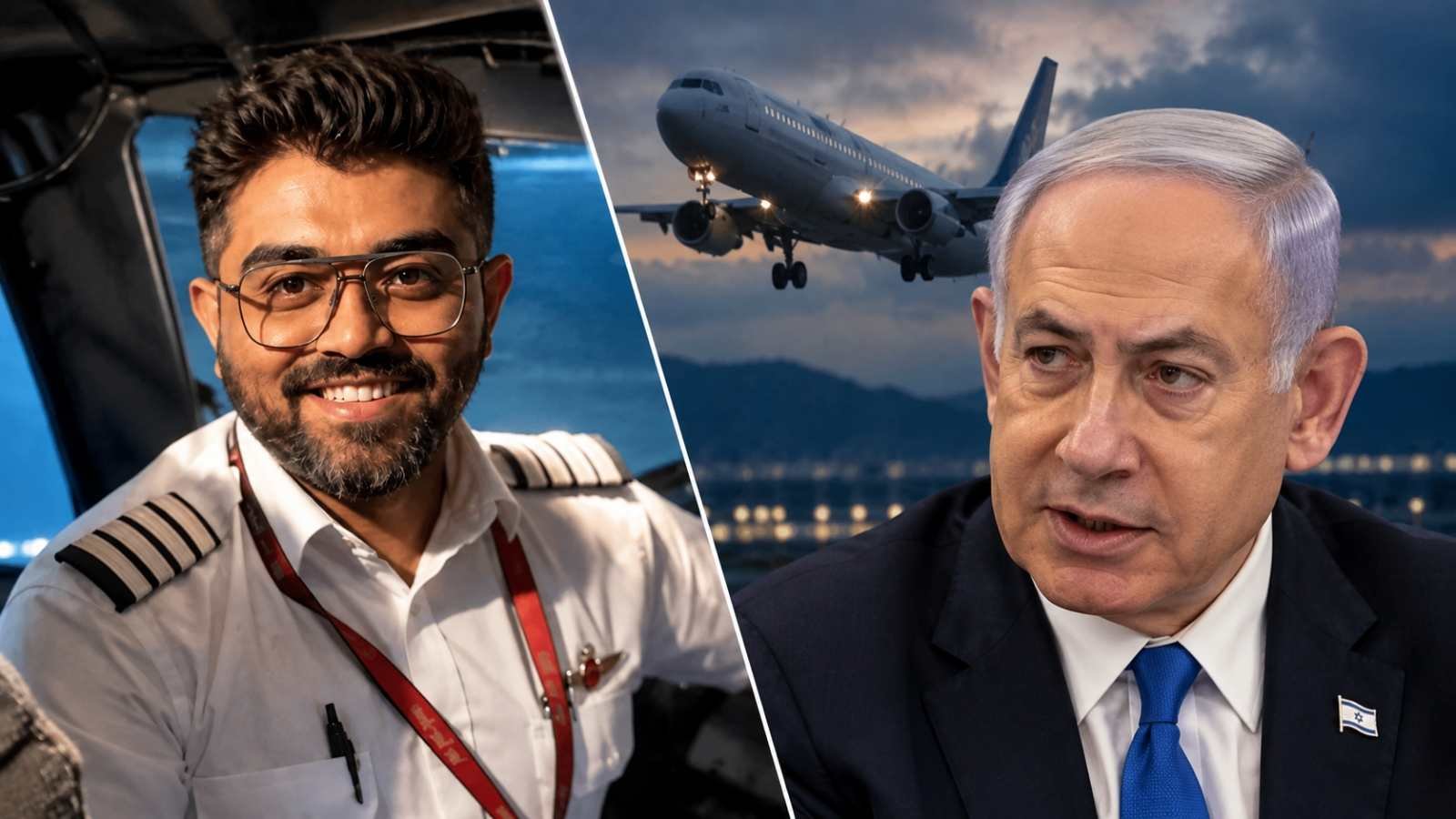
Indian pilot Captain Smit Machchhar has provided a detailed account of a mid-air assault inside the cockpit of flydubai flight FZ1073, describing the moments his co-pilot attacked him during a flight from Dubai to Tel Aviv. Speaking in a phone call with Israeli Prime Minister Benjamin Netanyahu on Saturday, Machchhar explained that the confrontation began shortly after the co-pilot asked for permission to pray.
Machchhar said the flight had been operating normally before the incident. After the co-pilot, identified in media reports as Omani national Hamam al-Hammami, expressed his desire to pray, Machchhar turned away out of respect. Approximately four to five minutes later, the captain felt a severe blow to the back of his head.
Initially, Machchhar believed the aircraft had suffered catastrophic structural damage. However, as repeated blows continued, he realized he was being physically assaulted by his co-pilot. The physical struggle severely affected Machchhar's vision, leaving his sight completely blurred as he tried to defend himself.
The Cockpit Assault and Altitude Loss
During the struggle, the Boeing 737 MAX 8 aircraft entered a sharp descent. Flight-tracking data indicated that the jet plunged from its cruising altitude of 34,000 feet to 16,600 feet in approximately 90 seconds. Machchhar recalled hearing passengers screaming in the cabin as the plane rapidly lost altitude.
Despite his injuries and blurred vision, Machchhar attempted to open the cockpit door to get help. His initial attempt was thwarted when the co-pilot managed to force the door shut again. Machchhar was eventually left lying on the cockpit floor as the aircraft continued its descent.
Machchhar told Netanyahu that he resolved to make one final effort to reach the door. Pushing against his physical limitations, he reached the internal door mechanism. He explained to Netanyahu that while the cockpit door requires an entry code to be opened from the outside, it can be opened from the inside using a simple twist-to-open knob.
Opening the Cockpit Door
While crew members and passengers outside had attempted to enter the cockpit using the emergency code, the co-pilot had actively prevented the system from granting them access. By reaching up and twisting the internal knob, Machchhar successfully unlocked the door, allowing those outside to rush into the cockpit.
Passengers and crew immediately moved to subdue the co-pilot, who was held on his knees with his hands bound. Two off-duty flydubai pilots, who were traveling as passengers to operate a subsequent return flight, entered the cockpit to take control of the aircraft. They stabilized the plane and initiated an emergency diversion.
The flight landed safely at Tabuk in Saudi Arabia nearly four hours after taking off from Dubai. Following the emergency landing, Machchhar received immediate medical attention, including treatment from an Israeli dentist, Dr. Shota Musayev, who was traveling on board the flight. Machchhar credited the dentist with helping to save his life.
Diplomatic Recognition and Recovery
During their conversation, Netanyahu praised Machchhar for his composure and bravery under extreme pressure, calling him a hero for Israel, India, and the world. Netanyahu extended an invitation to both Machchhar and Indian Prime Minister Narendra Modi to light a ceremonial torch at Israel's next Independence Day ceremony. Machchhar had previously spoken with Prime Minister Modi to share a similar account of the incident.
The Indian Embassy in the UAE confirmed on Saturday that Machchhar is currently in the UAE, where he remains under medical care and is recovering well. Both the captain and the co-pilot were transported to the UAE following the incident in Saudi Arabia.
An investigation led by the UAE is currently underway. UAE Attorney General Hamad Saif Al Shamsi stated that investigators established the co-pilot used the aircraft's crash axe to attack Machchhar in an attempt to seize control of the plane. UAE authorities are treating the incident as an attempted terrorist attack. Reports indicate the co-pilot had previously been barred from flying in Oman due to concerns over extremist views, though investigators have not yet established a definitive motive or links to any militant groups.