Experts Highlight Digital Shift in Indian Agriculture Through AgriStack and AI Integration

India's agricultural sector is experiencing a technological transition driven by artificial intelligence and digital infrastructure, according to speakers at the India Today Group's Kisan Tak Bharat Agriculture Conference. Experts at the event compared the impact of AgriStack, a unified digital system for farmers launched in 2024 as part of the Digital Agriculture Mission, to the revolutionary adoption of the Unified Payments Interface (UPI) in the country's financial landscape.
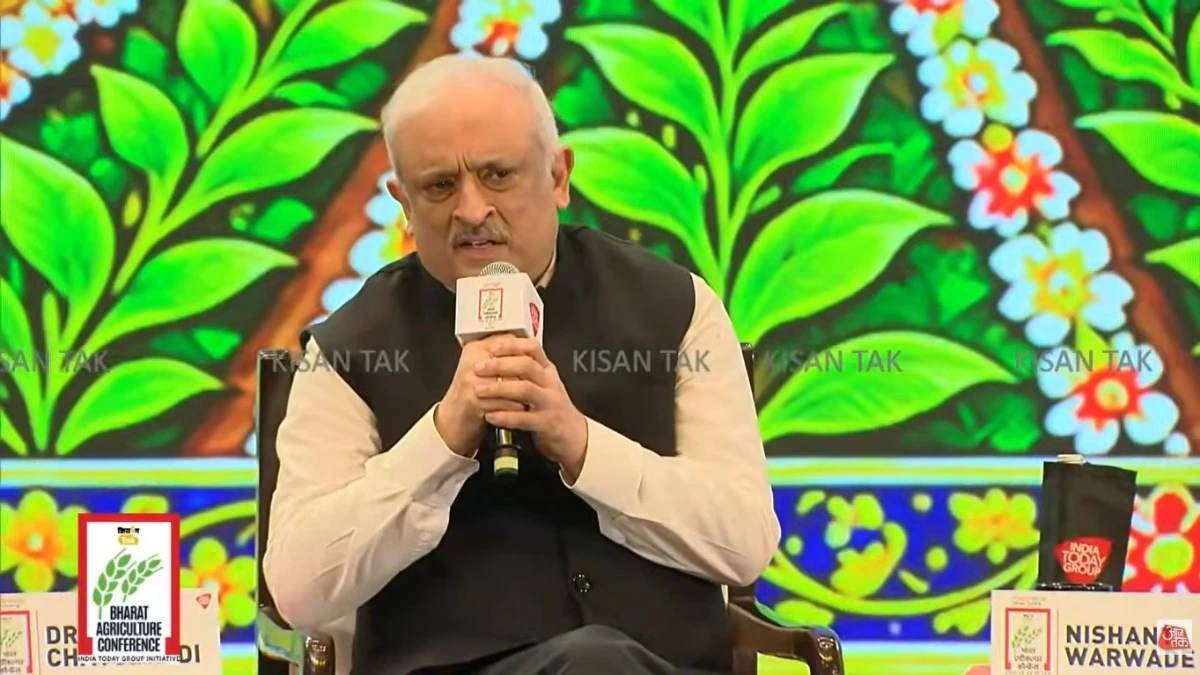
IAS officer Dr. Devesh Chaturvedi, who presided over AgriStack, stated during the conference that technology and AI are driving a structural shift in national farming practices. He explained that AgriStack operates across three foundational layers to create verifiable digital records for the agricultural community.
Structure and Function of the AgriStack System
According to Dr. Chaturvedi, the first layer of AgriStack is the Map Registry, or Farm Registry, where every recognized land field is recorded with a unique farm ID tied to Revenue Department data. The second layer is the Farmer ID, which assigns an 11-digit unique identifier to individual farmers, functioning similarly to Aadhaar.
The backend of the Farmer ID integrates the individual's Aadhaar number, mobile contact details, landholding size, and specific ownership shares on shared plots. Farmers also have the option to provide consent to share their ID information with others in the network.
The third key component involves digital crop surveys. Dr. Chaturvedi noted that physical surveyors must be present at the specific plot location for the survey app to unlock, after which they capture photographs and record crop details. Alternatively, satellite imagery is utilized to conduct remote crop surveys. To date, the Government of India has generated 11 crore farmer IDs and completed digital surveys across 30 crore land plots.
Integration with AI and State-Level Adoption
AgriStack is being utilized alongside Bharat Vista, a central government AI platform. While Bharat Vista allows farmers to input their location to receive weekly weather updates or market rates, its integration with AgriStack incorporates data regarding exact land locations, crop types, agro-climatic zones, and soil health conditions to deliver specific advisories, such as precise irrigation timing.
State governments are actively implementing these digital frameworks. Nishant Warwade, Secretary of Agriculture for the Madhya Pradesh government, reported that Madhya Pradesh has achieved 100 percent compliance in both farmer IDs and geo-referencing, leading to the full digitization of all state agricultural schemes.
Benefits of Digitization and Information Dissemination
Roli Jindal, co-founder and CEO of RSMI Cropalytics, highlighted three primary advantages of agricultural field mapping and digitization: speed, scale, and accuracy. She emphasized the necessity of cost-effective monitoring, noting that a field with crops worth Rs 4 lakh requires a monitoring cost proportionate to its value, such as Rs 40. Jindal added that georeference data and automated processing now allow decision-makers to learn of crop damage rapidly, replacing traditional processes that took up to two months.
To bridge the communication gap between government tools and farmers, social media influencer Pargat Singh stressed the role of digital platforms and influencers in rapidly spreading policy updates, crop advisories, and farming practices. Warwade confirmed that Madhya Pradesh has already integrated social media into its public relations approach, deploying digital influencer teams that use AI tools to create daily informational flyers.