EU Shifts Wildfire Strategy From Suppression to Prevention After Record Destruction

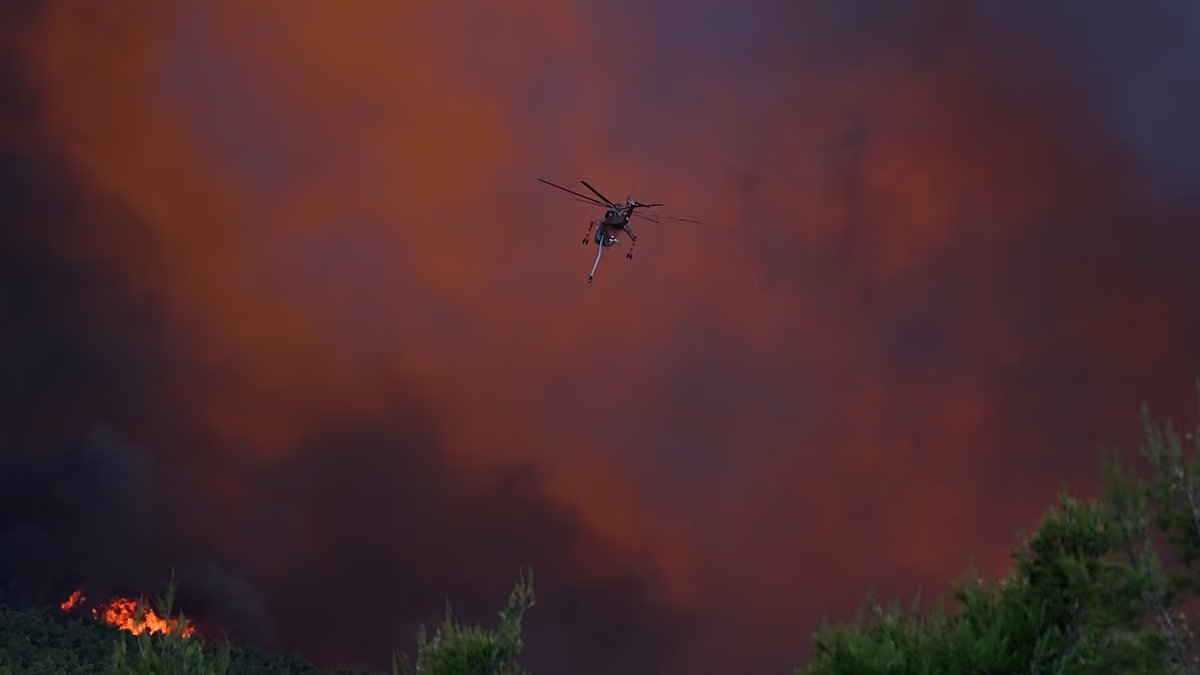
Following consecutive years of devastating wildfires, the European Union is rewriting its wildfire management strategy. The bloc is shifting billions of euros in funding and policy focus away from merely battling active flames and toward preventing catastrophic fires before they can start.
According to data from the European Forest Fires Information System (EFFIS) as of July 30, more than 434,976 hectares have burned across the EU this year. This follows a catastrophic 2025 season in which more than one million hectares were destroyed, marking the worst wildfire season since records began. In response to these unprecedented crises, Brussels is moving away from its traditional reliance on purchasing more planes, trucks, and firefighting equipment, focusing instead on proactive risk reduction.
The Limits of Fire Suppression
Experts in the field have long argued that relying solely on disaster response is an unsustainable strategy. Alexander Held, a forester at the European Forest Institute and the Pan-European Forest Risk Facility with 25 years of experience in fire policy, notes that extreme weather conditions render traditional firefighting insufficient.
"If you look at what's happening right now from Portugal to Spain to France to Greece to Turkey to Germany, we have simultaneous large fires," Held said. He explained that once a fire starts under hot, dry, and windy conditions, no amount of aircraft or ground crews can guarantee control, quickly overwhelming even the most experienced fire services.
Held pointed out that despite decades of EU declarations regarding resilience, funding has historically favored suppression because investing in response assets, like helicopters and fire trucks, is politically easier. He cited Portugal as a successful exception, as the country has shifted approximately half of its wildfire budget into land management and prevention. Held advocates for a "50-50 rule," where every euro spent on suppression is matched by a euro spent on reducing risk before ignition occurs.
A Strategic Shift in Policy
The European Commission has officially integrated this preventive logic into its policy framework. Anna-Kaisa Itkonen, the Commission's spokesperson for energy, climate, environment, and transport, emphasized this shift, stating, "We cannot focus only on literally putting out fires. Preparedness for us is really, really important."
The formal transition occurred in March 2026 with the launch of the Commission's Integrated Wildfire Risk Management strategy. This framework establishes a model built on four pillars: prevention, preparedness, response, and recovery, with prevention designated as the top priority.
Several factors drove this policy overhaul. In addition to the record-breaking 2025 fire season, climate change is making fires hotter, longer-lasting, and increasingly difficult to control. Furthermore, approximately 96 percent of ignitions are linked to human negligence or arson, meaning prevention strategies must address human behavior alongside vegetation management. Finally, the geographic spread of wildfires into non-traditional regions—such as Germany, Czechia, Sweden, Iceland, and the Arctic Rim—means a strategy focused solely on Southern European response capacity is no longer adequate.
Implementing Prevention on the Ground
To support this strategy, the EU is directing prevention funding through multiple existing financial instruments. These include the Common Agricultural Policy's rural development plans, cohesion policy funds, the Recovery and Resilience Facility, and research funding from the LIFE and Horizon Europe programs.
In practice, these funds are being used to finance fuel reduction, the creation of firebreaks, targeted grazing, forest thinning, and the restoration of fire-prone landscapes. Active projects are already underway in Spain, Portugal, Italy, and Sicily.
Additionally, approximately 35 percent of the EU's next long-term budget has been earmarked for climate and environmental initiatives. This allocation includes nearly €19 billion in cohesion funds dedicated to climate adaptation, featuring a fast-track mechanism for the hardest-hit regions.
The Commission is also upgrading EFFIS, its satellite-based early warning and risk-forecasting tool. By 2027, the Commission plans to propose a council recommendation on integrated wildfire risk management and launch a dedicated EU portal to help member states share funding pathways and best practices.
While response capacity remains part of the strategy—with the rescEU initiative adding twelve firefighting planes and five helicopters—Itkonen reiterated that "the goal is not to fight more fires. The goal is to have good prevention policies."
Challenges in Governance and Funding
Despite the policy shift, significant practical challenges remain. The European Court of Auditors has warned that wildfire governance is currently fragmented across various civil protection, forestry, agriculture, and climate departments, leaving the EU without a single, comprehensive overview of total prevention spending.
Furthermore, practical prevention tools such as prescribed burning and targeted grazing frequently face administrative delays due to permitting bottlenecks and liability regulations. Another obstacle is that prevention projects require continuous, recurring funding for maintenance, whereas many EU financial instruments are structured primarily for one-off investments.
To resolve these issues, Held suggests establishing independent, non-bureaucratic centres of excellence that can operate flexibly. He recommends involving foresters, farmers, and land planners directly, rather than routing all wildfire matters through civil protection agencies.
As an example of the financial utility of prevention, Held noted that Germany spends roughly €30 million annually fighting recurring fires on contaminated land. Halving just one of those fires would free up €15 million for prevention work. However, he acknowledged the difficulty of bridging the gap, noting that "it's difficult to argue, because the one is disaster response money, and it's difficult to bridge that into prevention."