Ed Sheeran's US Tour Support Acts Pull Out After Macklemore Is Dropped
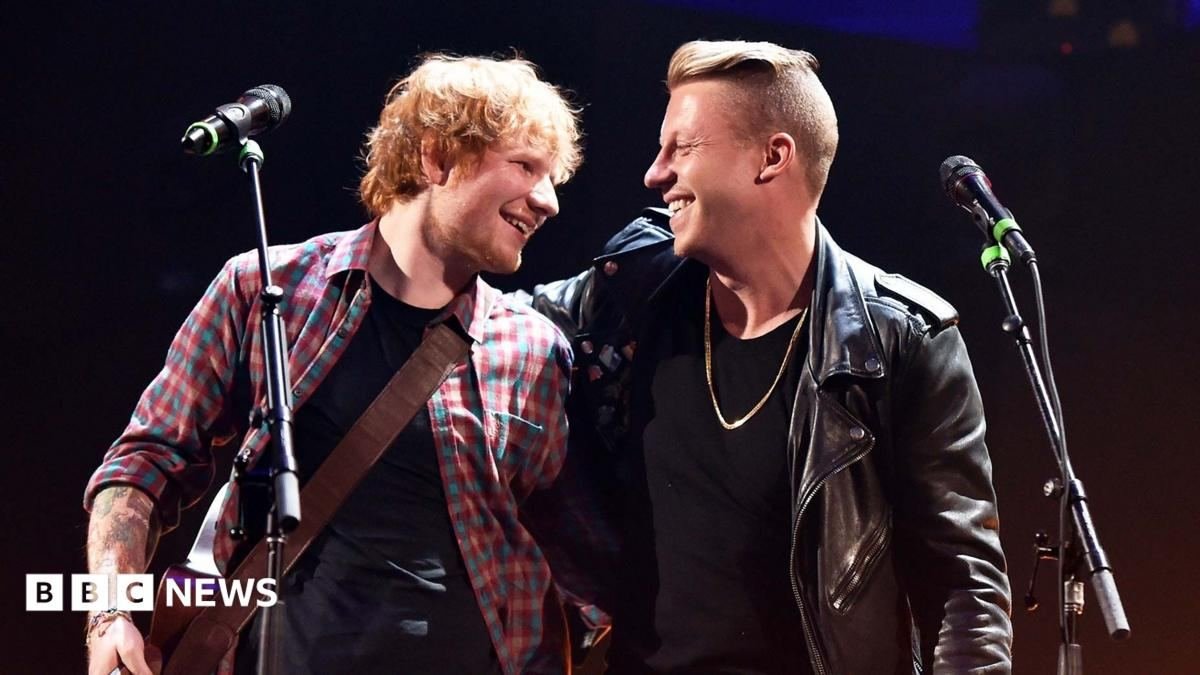
All of the remaining support acts on Ed Sheeran's US tour have withdrawn from the lineup. This collective departure follows the removal of American rapper Macklemore from the tour after he made pro-Palestinian statements during recent performances.
The departing artists include high-profile musicians such as Finneas, the brother of pop star Billie Eilish, Danish band Lukas Graham, and Irish singer-songwriter Aaron Rowe. Additionally, the Irish folk band Beoga, who perform on stage with Sheeran every night, have also pulled out of the tour.
Finneas released a statement explaining his decision, writing, "Artists must not be silenced when they speak up for the oppressed." Lukas Graham also expressed their stance on Instagram, stating that artists should be permitted to speak about war, civilian casualties, and children, regardless of where they live or what flag flies over them.
Promoter Decision and Sheeran's Response
The mass departures occurred shortly after Ed Sheeran issued a statement on Instagram clarifying his position. Sheeran emphasized that he was not responsible for the decision to remove Macklemore from the tour, attributing the move entirely to the tour promoters, Messina Touring Group.
"Macklemore coming off tour was the promoter's decision, it was not mine," Sheeran wrote. He added that he had spent the week speaking with venues "at length" to try to find a resolution, but the promoters ultimately decided to pull the plug. Sheeran stated he would not abandon his touring crew, other support acts, and musicians who rely on him for their livelihoods.
Sheeran also addressed his decision to remain politically neutral on stage. While he described the conflict between Israel and Palestine as a "human tragedy" and said he was "appalled" by it, he defended his choice not to use his professional platform for politics. He noted that his audience includes young children of all backgrounds who do not expect a political forum.
"I am not complicit," Sheeran stated, adding that having personal views does not require him to speak publicly. He expressed respect for Macklemore's strength of purpose but argued that there are multiple approaches to advocating for peace, stating that his own goal is to provide a place of safety and sanctuary.
The On-Stage Comments and Subsequent Backlash
The controversy began on September 4 during a concert at the MetLife Stadium in New Jersey. Macklemore, whose real name is Benjamin Haggerty, told the audience that he wanted to use the stadium platform to say "Free Palestine." He then performed his song "Hind's Hall," which is dedicated to pro-Palestinian student protestors at Columbia University and criticizes Israel's military actions.
During the performance, video footage showing devastation in Gaza was projected onto the stadium's large screens. While some audience members cheered, the performance quickly drew criticism online. The Israeli American Council launched a petition calling for Macklemore's removal, and the campaign group StopAntisemitism accused the rapper of ambushing fans with propaganda, a claim later shared by pop star Pink.
The following night, Macklemore addressed the criticism directly on the same stage, speaking to "Jewish brothers and sisters" in the audience. He stated that criticism of Israel, apartheid, or genocide was not a criticism of Jewish people, and expressed a desire to show solidarity with people in Gaza and the West Bank.
Venue Pressure and Billionaire Involvement
Following the performances, some venues pressured the tour promoters to drop Macklemore. Messina Touring Group told Rolling Stone magazine that several venues threatened to bar the rapper from performing, which would have resulted in the cancellation of the entire tour and impacted hundreds of thousands of fans.
Macklemore announced on Monday that he had been dropped from the tour, alleging that a boycott had been organized by Robert Kraft, the billionaire owner of the Gillette Stadium in Massachusetts. Kraft, who has previously hired Sheeran to perform at his wedding, confirmed he made the decision to bar Macklemore from his venue.
Kraft accused Macklemore of having "a broader history of antisemitic rhetoric" and stated that his venue would not provide a platform for hate speech. While Kraft agreed that too many lives had been lost, he argued that Macklemore's selective sharing of information ignored the actions of Hamas, thereby advancing divisiveness. Kraft did not address allegations that he pressured other venues to follow suit.
Artists React to Financial Influence
Several of the withdrawing support acts indicated that Kraft's financial influence played a role in their decision to quit. Lukas Graham wrote, "Money doesn't give you the right to own the conversation. Nobody's bank balance should decide who gets to speak or which suffering we're allowed to acknowledge."
Aaron Rowe, who has opened for Sheeran since the Australian leg of the tour earlier this year, described his decision to leave as difficult. He expressed deep gratitude to Sheeran, calling him a friend who had changed his life, but ultimately chose to withdraw alongside the other acts.
Macklemore later expressed empathy for the position Sheeran was placed in but criticized his silence. "There is no neutral position between the oppressor and the oppressed," Macklemore wrote, acknowledging that taking a stand had cost him sponsorships, relationships, and access, but stating that if his actions kept the focus on Palestine, the tour was a success.
Context of the Gaza Conflict
The ongoing military campaign in Gaza was launched by the Israeli military in response to a Hamas-led attack on southern Israel on October 7, 2023. During that initial attack, approximately 1,200 people were killed and 251 individuals were taken hostage.
Since the start of Israel's military response, more than 73,780 people have been killed in Gaza, according to figures from the territory's Hamas-run health ministry. These casualty figures are considered reliable by the United Nations. Israel has rejected allegations of genocide, maintaining that its military operations in Gaza and the occupied West Bank are conducted in self-defence and in accordance with international law.