Durai Vaiko’s Hindi Speech at INDIA Bloc Protest Triggers Language Debate in Tamil Nadu
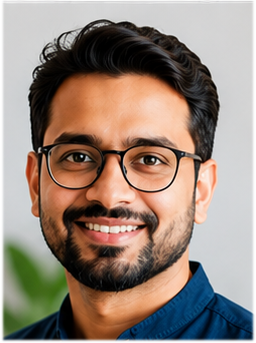

MDMK Member of Parliament Durai Vaiko drew public attention during a mock Parliament organized by the INDIA bloc in New Delhi after switching to Hindi for his concluding remarks. The protest took place on October 31, 2026, to oppose alleged voter deletion under Chief Election Commissioner Gyanesh Kumar. The demonstration was led by Mallikarjun Kharge, President of the All India Congress Committee and Leader of Opposition in the Rajya Sabha.
During the event, Durai Vaiko initially addressed the gathering in English. Before making his final statements, he prefaced his remarks by stating that he was not proficient in Hindi and was attempting to communicate in what he described as "Hinglish." Observers noted that his delivery involved reading transliterated Hindi script in the Latin alphabet, which requires familiarity with specific consonant sounds such as da, dha, ta, and tha to reproduce accurately.
Political Reactions and Social Media Debate
Following the demonstration, Bharatiya Janata Party (BJP) leader Vinoj P Selvam raised objections to the speech on social media on November 2, 2026. Selvam criticized what he described as political contradiction, asserting that while leaders protest against alleged Hindi imposition in official settings and invoke defense of the Tamil language in public demonstrations, they participate in Hindi discussions during political events organized by their own alliance.
The incident has re-energized discussion surrounding the use of language in regional and national politics. Questions have been raised regarding why language is presented as a firm political principle in regional debates, yet treated as a practical medium of communication during national political engagements.
Educational Policy and Language Access
The controversy has also brought focus to Tamil Nadu's educational landscape and the differing access to language instruction across state and private institutions. In Tamil Nadu, public government classrooms operate under established language frameworks, whereas private school networks—including CBSE institutions managed by various political figures—provide broader language options to students enrolled in private education.
Critics argue that this creates a dual structure where regional identity is maintained in the public school system, while private options allow students from higher socioeconomic backgrounds to access national and international language options. Under this framework, Tamil remains central to regional cultural identity, English is emphasized for professional and commercial utility, and Hindi is engaged selectively during political negotiations in New Delhi.
Historical Context of Tamil Language Ideology
The ideological roots of regional language politics in Tamil Nadu extend to 19th-century academic and linguistic studies. In 1816, Francis Whyte Ellis published his work titled "Dravidian Proof," establishing that South Indian languages belong to a language family distinct from Sanskrit.
In 1856, missionary and linguist Bishop Robert Caldwell published "A Comparative Grammar of the Dravidian or South Indian Family of Languages." Caldwell argued that Tamil and related South Indian languages were entirely independent of Sanskrit, demonstrating that Tamil was a highly developed classical language capable of thriving independently.
Subsequent political movements adapted these historical and linguistic theories into political platforms, developing a viewpoint that the Tamil language requires protection from northern linguistic centralization. The recent commentary surrounding Durai Vaiko's remarks reflects the ongoing debate between political messaging on language identity and practical language usage on the national stage.