
Director Tigmanshu Dhulia Criticizes Dhurandhar 2, Questions the Story Behind the Franchise

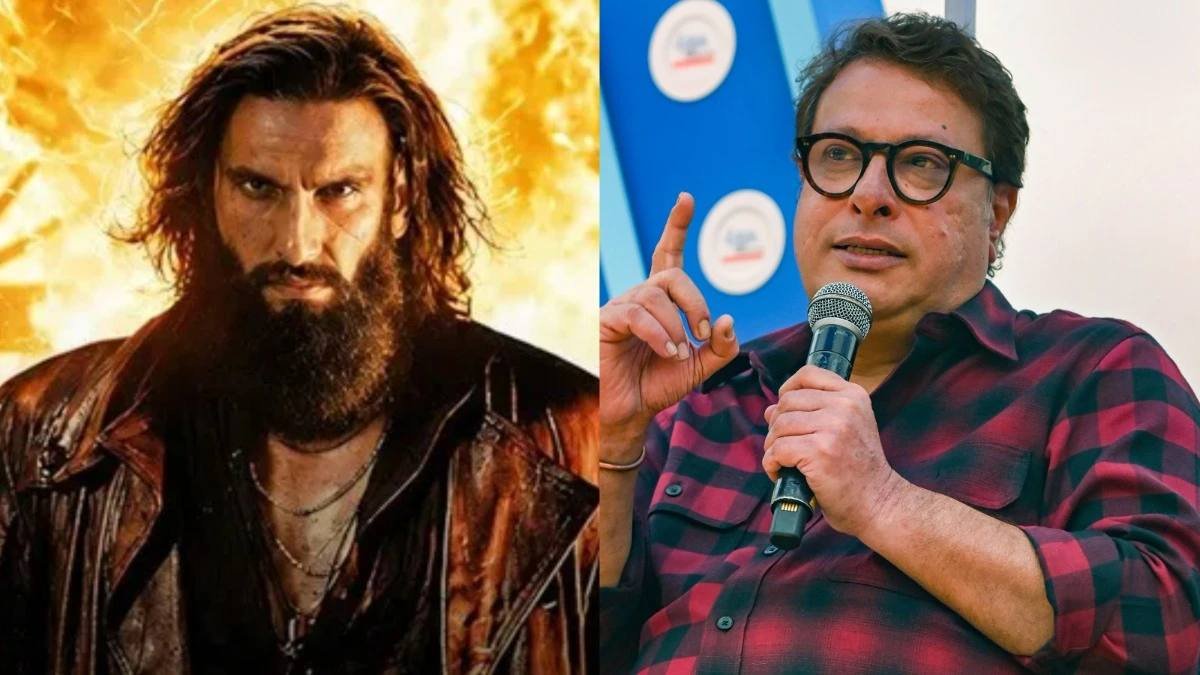
At The Wire's event, The State of Media and Film Industry, National Award-winning filmmaker Tigmanshu Dhulia expressed his disappointment with the Dhurandhar franchise, questioning the story behind its commercial success.
Dhulia argued that the industry has become driven by corporate thinking, resulting in a lack of original stories. He clubbed Dhurandhar with commercial successes such as Pushpa and KGF, calling many of today's mainstream films 'fictional biopics.'
"Because it is a corporate culture, the same kinds of films are being made. Every film is a biopic, a fictional biopic. Every film, you can watch Pushpa, you can watch KGF, Dhurandhar. I am talking about commercial mainstream cinema," he said.
However, Dhulia wasn't dismissive of the film as a piece of entertainment. He praised the presentation, music, and pacing of the first part, acknowledging everything that made the film a huge theatrical draw.
His problem, however, was what lies underneath all that packaging. "If I ask you to tell me the story of Dhurandhar, I liked that film, by the way, the first part. Very well presented, very engaging, good use of music," he said.
Then came the question that, in many ways, sums up his criticism of contemporary commercial cinema: what exactly is the story? "But if you ask someone to tell you its story, you won't be able to tell the story of Dhurandhar. There is a man, he is a cover spy, he goes to Pakistan and wreaks havoc there. Is that a story? Stories have disappeared from films," he added.
For Dhulia, the problem isn't simply Dhurandhar. He sees it as a symptom of a larger crisis in Hindi cinema, where filmmakers with unusual ideas are often stopped before they even get the chance to make them.
"For one, the people who tell stories have disappeared, and those who want to tell them are not allowed to make them. They are not allowed to tell those stories because they think, 'This story won't work.' There is only one template," he said.
He believes that this 'one template' is a result of extreme capitalism, which is flattening individuality everywhere, not just on screen.
"This is what extreme capitalism does; people also start looking the same. Go anywhere, everybody looks the same. Every city has started looking the same. The character of every city has disappeared," he added.
He brought the argument closer home by talking about Allahabad, his hometown, and how its distinct character has, in his view, gradually disappeared.
"My city, Allahabad, which was once a beautiful city, now looks like any other city. The same malls, the same cars, everything is the same. This kind of political system kills individuality," he said.
The Dhurandhar franchise, starring Ranveer Singh as an undercover Indian intelligence operative, follows his character's infiltration of Pakistan and his attempts to navigate its criminal and political networks as he works to dismantle a terror operation targeting India.
Together, the two films have reportedly earned more than Rs 3,000 crore worldwide, turning Dhurandhar into a box-office phenomenon and one of Bollywood's most commercially successful franchises.
Whether that success represents a new direction for Hindi cinema or simply a more effective version of an existing formula is clearly still up for debate. Dhulia, at least, appears to have made his position clear: bigger isn't necessarily better, and a film can change the box-office game without necessarily changing the storytelling game.
The filmmaker behind Haasil and Paan Singh Tomar, and a frequent collaborator of the late Irrfan Khan, is currently awaiting the release of Ghamasaan. The ZEE5 Original, starring Arshad Warsi and Pratik Gandhi, is scheduled to premiere on September 11.