Chennai Families Lead the Way in Addressing Blood Donor Shortages Through Generational Commitment
Blood donation organisations frequently report an increasing difficulty in finding individuals with "generous veins" to support healthcare systems. However, experiences from Chennai suggest that the solution to this shortage may lie within households, where parents are actively inspiring their children to commit to the cause.
Advocates for blood donation, including Srivatsa Vema from the Federation of Indian Blood Donors Organisation (FIBDO), have expressed ongoing concern over the declining number of blood donors. The stories of two Chennai families highlight how personal conversations and parental examples can establish long-term family traditions of life-saving service.
The Rare Bond of the Shamsudeen Family
Shaikh Shamsudeen, a 29-year-old resident of George Town, began his journey as a blood donor in 2016. At the time, he was a student at New College, an institution known for its strong blood donation culture supporting government hospitals, particularly the Royapettah Government Hospital. When an urgent request for AB Negative blood for a patient at the Cancer Institute reached his classroom, Shamsudeen immediately volunteered, fulfilling a long-held desire to follow in the footsteps of his father, Shaikh Sadaqathullah.
Both father and son share the rare AB Negative blood type, which is found in only two percent of the global population. Because of the rarity of their blood group, both men have focused on emergency donations rather than participating in general blood donation camps. Shamsudeen is registered with the Madras Voluntary Blood Bureau (MVBB) in Gopalapuram, an organisation run by the TTK Group that celebrated its Golden Jubilee in April 2026. Whenever the bureau contacts him during an emergency, Shamsudeen responds immediately.
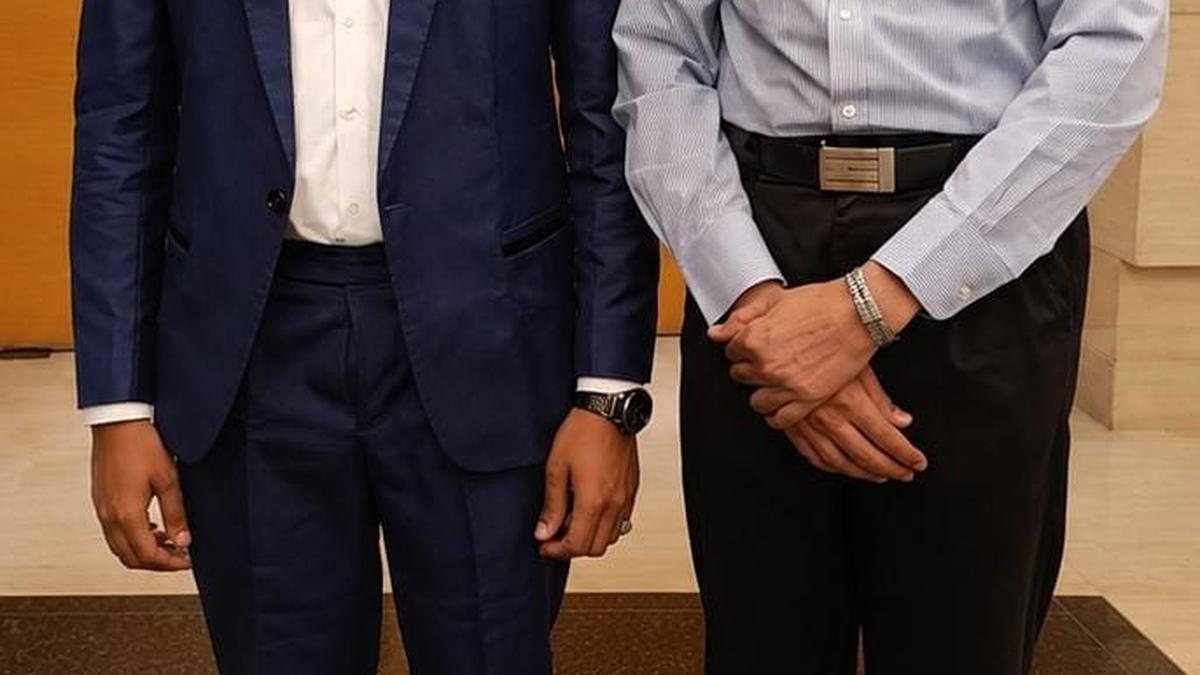
To date, Shamsudeen has completed 22 blood donations. His father, 56-year-old Shaikh Sadaqathullah, has a lifetime tally of 53 donations. Sadaqathullah, who is also an amateur radio operator with the call sign VU2SDU, began his donation journey in 1993 at the Perambur Railway Hospital in response to a friend's call. Although Sadaqathullah recently had to stop donating blood due to health concerns, the duo's shared commitment was recognized last month on World Blood Donors Day. The Crescent Blood Donors honoured them at an event at the Kavikko Convention Centre in Mylapore, where they received an award presented by film director Ameer Sultan and Ahmed Buhari, a trustee of the B.S. Abdur Rahman Crescent Institute of Science & Technology.
A Multi-Generational Legacy in Nanganallur
In Nanganallur, 65-year-old R. Ravikumar has built an extensive record of 106 blood donations. A retired manager from the Oriental Insurance Company Limited, Ravikumar views blood donation not merely as charity, but as a family legacy that connects him to the memory of his late father, S. Rengarajan. Rengarajan, who donated blood more than 50 times during his life, often advised his family that even if they could not help someone financially, they could always serve society through their actions without expecting anything in return.
Inspired by his father, Ravikumar began donating blood in 1984 at the age of 23, with his first donation assisting a colleague's wife who was undergoing surgery. To maintain his eligibility to donate, Ravikumar prioritises his physical fitness through regular marathon running and long-distance cycling. Since turning 56, he has participated in numerous endurance events and earned 85 medals. His brother, R. Ramesh, has also embraced the family tradition, crossing 60 blood donations.
Over the decades, Ravikumar has donated blood to a wide range of medical facilities, including Apollo Hospital on Greams Road, Nandanam Apollo Cancer Speciality Hospital, Vijaya Hospital, Miot Hospital, Egmore Children’s Hospital, Adyar Cancer Institute, VHS Blood Bank, various Rotary Club camps, Perambur Railway Hospital, Sevalaya in Thirunindravoor, SIMS Hospital, Chrompet Government Hospital, Rajaji Government Hospital, Sunrays Hospital, and WCCG blood donation camps. His 106th donation took place on March 17, 2026, at Sunrays Hospital in Ashok Nagar. Although 65 is typically considered the maximum age for blood donation, Ravikumar continues to seek to be an exception to the rule.
The Impact of Personal Connections
Among his many donations, Ravikumar recalls a particularly moving experience in 2019, when he donated blood for a six-year-old cancer patient from Odisha. Despite Ravikumar's insistence that he had done nothing extraordinary, the child's parents insisted on meeting him to bow in gratitude, a gesture that reinforced his belief in the universal power of compassion.
The experiences of the Shamsudeen and Ravikumar families suggest that the most effective way to address the donor shortage is to foster awareness within the home. By sharing personal stories of donation with the next generation, families can build sustainable networks of voluntary donors to meet critical medical needs.