Canada Aims to Secure EU Associate Member Status by June 2027

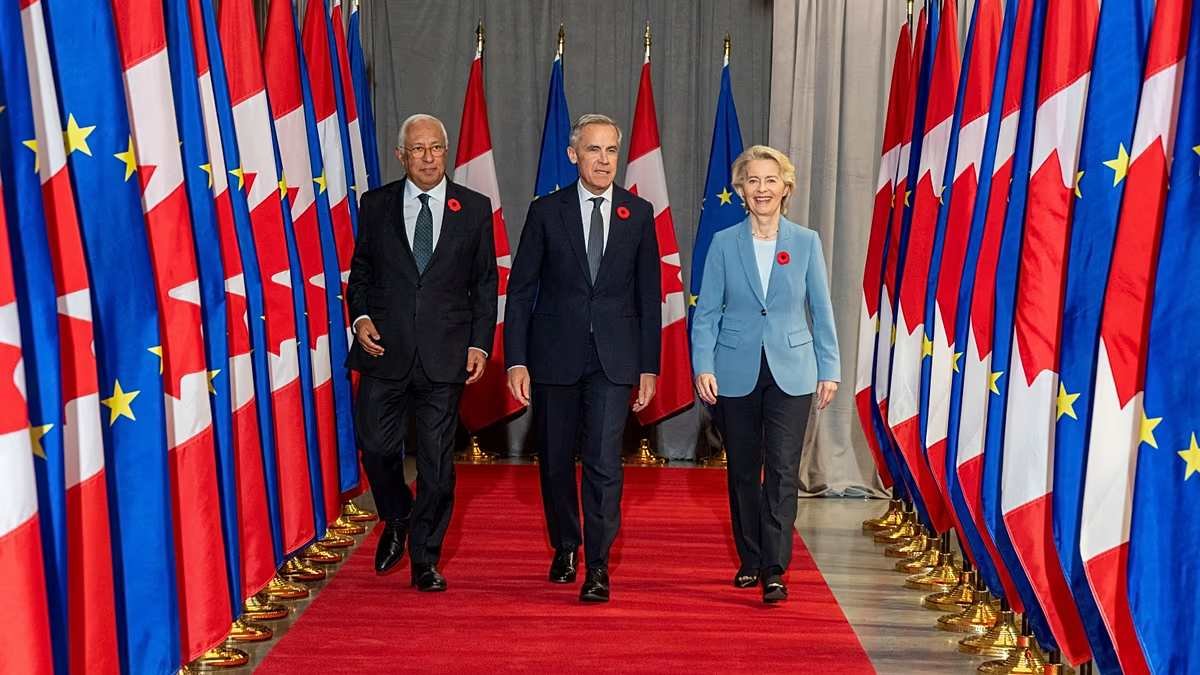
Canada and the European Union are working to conclude negotiations that would establish Canada as the bloc's first-ever "associate member" by June 2027, Canadian Prime Minister Mark Carney announced on Friday. Speaking after a bilateral summit in Montréal, Carney outlined plans to create a new framework that deepens ties between Canada and the EU across policy, programmes, and governance.
The proposed associate membership status has no existing precedent or basis in European Union treaties. While the practical mechanics of the agreement are still to be negotiated, Carney emphasised his goal to build a comprehensive relationship short of full membership, which is restricted by treaty to European nations.
"We are working towards the deepest possible partnership short of accession, because of our geography, with Canada becoming the European Union's first associate member," Carney stated at the closing press conference. He added that both sides will determine the substance, scale, and scope of the new arrangement in the coming months.
Diplomatic Friction Over Terminology and Approval
The concept of associate membership was first raised publicly in September by European Commission President Ursula von der Leyen, surprising several EU capitals because it had not been widely discussed among member states. While Carney initially showed caution regarding potential impacts on Canadian sovereignty, he firmly supported the proposed title during Friday's summit.
However, the designation has faced resistance within Europe. Germany opposed using the exact phrase "associate member" during negotiations on the summit's joint declaration. Consequently, the final agreed document uses the phrase "ever closer association." European Council President António Costa also adhered to the joint declaration's language during the press briefing, avoiding the term associate member while describing the alliance as the closest and most unique of its kind.
When asked about Germany's opposition, von der Leyen stated that there was broad support among member states for closer alignment with Canada. German Chancellor Friedrich Merz had previously suggested an associate membership definition in relation to Ukraine's accession goals, an offer Ukraine declined in favour of full membership. Commission officials suggested Berlin's opposition to von der Leyen's proposal may stem from internal political dynamics surrounding the term's origin.
Implementation Timeline and Bilateral Integration
Despite diplomatic debates over language, leaders highlighted several existing and expanded areas of cooperation. Von der Leyen noted Canada's integration into the Horizon research and Erasmus educational programmes, alongside joint contributions to a €90 billion support loan for Ukraine. The summit also produced expanded bilateral commitments in digital trade, energy, critical raw materials, artificial intelligence, supercomputing, and satellite technology.
"The concept of an associate member is uncharted territory, but we have the ambition, trust and creativity to shape it together," von der Leyen said, describing the initiative as the highest form of bilateral partnership.
The next steps involve a college-to-cabinet meeting between the European Commission and the Canadian government in the spring to define the operational framework. Carney is scheduled to attend an EU leaders' summit in June 2027, where he hopes to finalize the negotiations. The ratification requirements across European countries remain to be defined, though Carney has committed to putting the final agreement to a vote in the Canadian parliament.