BJP Rebuts Opposition Allegations on Electoral Roll Revision and ECI Operations

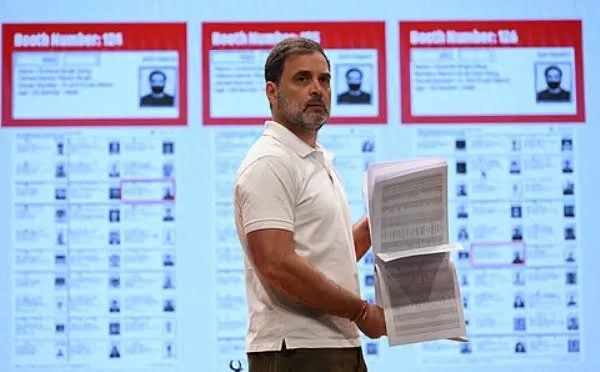
A political dispute has emerged over the Election Commission of India (ECI) and its Special Intensive Revision (SIR) of electoral rolls. Leaders from the opposition INDI Alliance, including the Congress party, have raised concerns regarding voter deletions, youth voter registration, and the overall functioning of the constitutional body, including accusations of voter fraud or "vote chori."
In response to these allegations, the Bharatiya Janata Party (BJP) released a video on its official account on October 25, 2026. The video addresses seven specific claims made by the opposition and presents counterarguments based on procedural rules, institutional safeguards, legal provisions, and registration data. The allegations and the BJP's counterarguments reflect contrasting views on the integrity of the revision process.
Voter Deletions and Form 6 Registration Rules
The first major allegation raised by opposition leaders concerns the claimed deletion of approximately 13 crore voters from the electoral rolls. The BJP disputes this characterisation, stating in its video that the names mentioned were merely flagged during the preparation of draft electoral rolls. These entries were marked because individuals were recorded as deceased, shifted to another address, absent, or listed as duplicate entries.
The BJP highlights that draft rolls are subject to verification before final rolls are published. According to the response, political parties utilize around 20 lakh booth-level agents to scrutinise draft lists, identify discrepancies, and assist in verifying entries. The party maintains that no eligible voter can be removed without following prescribed statutory procedures, which include providing individuals an opportunity to submit claims and objections.
A second allegation centers on Form 6, the document used by citizens to apply for inclusion in the electoral roll. Opposition leaders alleged that modifications to the form were introduced to obstruct young and first-time voters from registering. The BJP video states that Form 6 itself remains unchanged, though an additional declaration was introduced for administrative convenience. The video asserts that this addition received unanimous approval from all three Election Commissioners and was subsequently upheld by the Supreme Court of India.
Database Structure and Youth Registration Numbers
Concerns were also raised by opposition parties regarding the centralisation of electoral data. The opposition alleged that moving voter records into a central database reduces the administrative authority exercised by state-level election officials. Rejecting this claim, the BJP maintains that the electoral roll management system remains decentralised. Electoral Registration Officers (EROs) in individual states retain legal authority over their respective rolls.
The BJP video addresses the role of ECINET, the digital platform operated by the Election Commission. The party describes ECINET as a digital tool designed to facilitate election-related coordination and workflow, rather than an administrative mechanism that alters the statutory powers of local and state-level election authorities.
Regarding the registration of young voters, the BJP refutes allegations that the SIR process blocks eligible youth from joining the rolls. To support its position, the party cites registration metrics, stating that approximately 2.37 crore young voters have been added to the electoral rolls since the commencement of the SIR exercise. The video further claims that additions are occurring at a rate exceeding 50,000 per day, noting that voter registration facilities remain operational 365 days a year.
ECI Decision-Making and Fraud Safeguards
The opposition has also criticised the internal governance of the Election Commission, alleging that the institution operates as a "one-man show" under Chief Election Commissioner (CEC) Gyanesh Kumar. The BJP rejects this assertion, stating that major administrative and procedural decisions are made through consensus among all three Election Commissioners. The party notes that internal deliberations and discussions are standard components of multi-member institutional decision-making.
To counter allegations of systematic electoral fraud or "vote chori," the BJP highlights five specific operational safeguards embedded within the election administration framework:
- House-to-house verification: Field-level checks conducted by electoral personnel to confirm address details and voter eligibility.
- Political party involvement: Scrutiny conducted by approximately 20 lakh booth-level agents appointed by various political parties.
- Claims and objections: A formal statutory mechanism allowing citizens and authorised representatives to challenge entries or correct mistakes.
- Webcasting: Complete 100 per cent webcasting implemented at designated key stages of the process to enhance operational transparency.
- Counting agents: Representation of political parties through official agents present at designated stages of vote counting.
Appointment Framework and Statutory Context
The final allegation addressed in the BJP video concerns demands for the removal of CEC Gyanesh Kumar based on his appointment process. The BJP frames this debate by comparing the current legislative framework with historical practices. According to the video, prior to 2023, no specific statutory law governed the appointment of the Chief Election Commissioner and other Election Commissioners, with selections made primarily on the recommendation of the executive government.
The BJP contrasts this past mechanism with the provisions of the Chief Election Commissioner and Other Election Commissioners Act, 2023. The party emphasizes that the updated legal framework explicitly includes the Leader of the Opposition in the statutory selection committee, arguing that this statutory inclusion establishes a more balanced appointment process than existed previously.
While the BJP contends that opposition claims overlook existing checks and procedural distinctions between draft and final rolls, assessing the full scope of the dispute relies on comparing political claims against official Election Commission records, statutory procedures, and judicial rulings.