
Analysis Questions Congress Strategy and Links to Parallel Governance Models

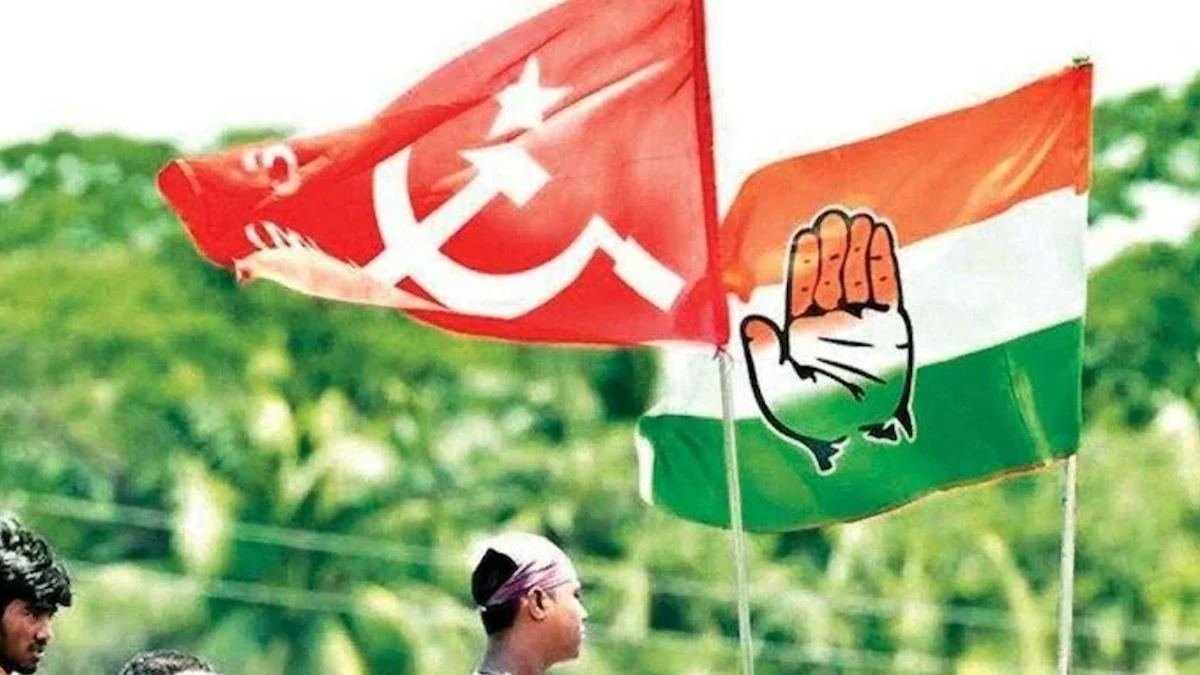
Recent political developments have drawn attention to the strategies employed by opposition parties, particularly the Indian National Congress, regarding their approach toward India's constitutional and democratic institutions. Concerns have been raised over whether recent political campaigns reflect attempts to create alternative platforms outside established constitutional frameworks.
Critics argue that actions by opposition groups go beyond routine political criticism and risk eroding public confidence in constitutional bodies. Particular scrutiny has been directed toward symbolic events and political alliances that parallel methods historically used by extra-constitutional movements.
Historical Context of Parallel Governance Models
The concept of parallel governance in India has historical roots in the internal security challenges posed by Maoist insurgents in the Dandakaranya region and parts of Chhattisgarh. Beginning with village-level Gram Committees in 1994, these structures expanded through the late 1990s and were formalised in April 2001 as Revolutionary People’s Committees, commonly known as Janathana Sarkars.
On June 1, 2004, the Dandakaranya Special Zonal Committee of the CPI (ML) [People's War] issued a policy document detailing the operational framework for Janathana Sarkars. The stated objective was to establish an alternative political, administrative, economic, and judicial authority—termed a "New Democratic State"—to replace the Indian constitutional framework in areas under insurgent control.
These parallel systems included Jan Adalats or Praja Courts, where proceedings and decisions were conducted by insurgent representatives without standard legal protections or constitutional standing. The Maoist movement explicitly linked these structures to their broader campaign against the Indian state, which included plans for a "Red Corridor" spanning from Tirupati to Pashupatinath.
Security Operations and Policy Shifts
During the UPA administration, critics noted instances where individuals with alleged insurgent links interacted with state bodies. For example, Dr. Binayak Sen, who had been convicted by a court in a case involving alleged Maoist links, was appointed in 2011 to a Steering Committee on Health under the Planning Commission.
Following the change in central leadership under Prime Minister Narendra Modi and Union Home Minister Amit Shah, anti-insurgency operations were intensified. The government established March 31, 2026, as a target deadline to eliminate left-wing extremism through enhanced coordination among state police forces and central security agencies. On March 31, 2026, the Government of India declared that the country had achieved LWE-free status after key insurgent leaders were either eliminated or surrendered.
The 'Jan Mahabhiyog' Event and Institutional Criticism
Attention has recently focused on political activities organized by the opposition in New Delhi. On October 31, 2026, a symbolic gathering termed "Jan Mahabhiyog" (People's Impeachment) was held at the residence of Congress President Mallikarjun Kharge. The event was attended by 215 Members of Parliament representing 19 political parties, and featured an address by Leader of the Opposition Rahul Gandhi.
Questions have been raised regarding the political justification for holding a symbolic impeachment exercise outside the formal procedures specified in the Constitution. Analysts pointing to the event argue that formulating allegations, conducting proceedings, and issuing resolutions within a party political platform resembles the structural approach of extra-constitutional assemblies rather than recognized parliamentary processes.
The Congress party has faced criticism for its stance on constitutional bodies, with observers noting a pattern where favourable outcomes are praised while adverse decisions lead to questioning the credibility of the judiciary, Parliament, and the Election Commission of India.
Political Outreach and Electoral Trends
Further debate has arisen over the outreach efforts of senior Congress leaders. Rahul Gandhi's engagement with an activist from an Ultra Left Student Organisation—who has publicly advocated that India learn lessons from political events in Bangladesh—has drawn scrutiny. Questions have been raised within political circles regarding the emphasis placed on ultra-left student figures over established party wings such as the National Students' Union of India (NSUI) and the Indian Youth Congress.
This political positioning occurs against the backdrop of prolonged electoral challenges for the Congress party in key states. The party has been out of power in West Bengal for nearly 49 years, in Bihar for 36 years, in Gujarat for 30 years, and in Odisha for 26 years, alongside its absence from central government since 2014.
Critics contend that repeated electoral setbacks have led to political frustration, prompting an increased reliance on extra-parliamentary mobilisations and public campaigns that challenge the authority of established democratic institutions.