Analysis Examines Legal, Technical, and Statutory Realities Behind Electoral Allegations in India

In modern political discourse, slogans such as "Vote Chori" are frequently used across press conferences, campaign speeches, and social media platforms to question election outcomes. However, an examination of India's electoral machinery demonstrates that conducting an election is a decentralized, legally mandated administrative process that spans several months. The process relies on millions of state government employees and involves continuous oversight by competing political parties at every stage.
To evaluate claims surrounding electoral integrity, the administrative process can be examined across three key structural areas: the revision of electoral rolls, the polling mechanism, and the constitutional and technical framework governing the voting apparatus.
Statutory Due Process in Electoral Roll Revision
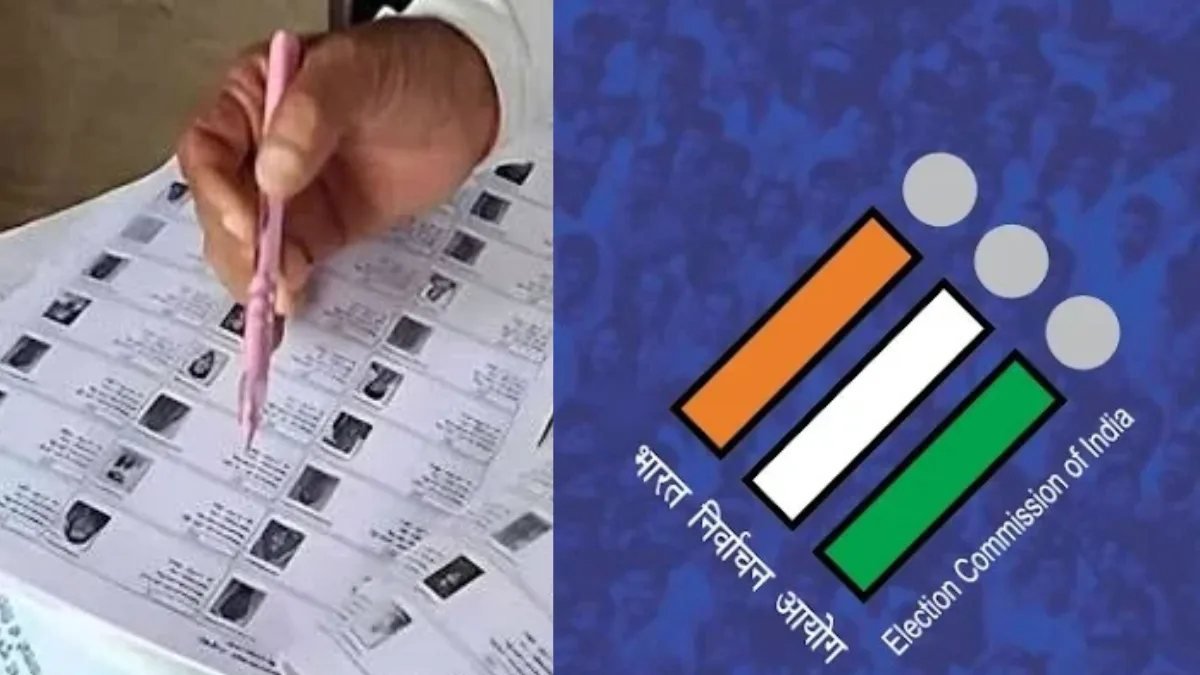
A common allegation during election cycles is that voter lists are manipulated prior to polling day through mass deletions or the addition of bogus voters during Special Summary Revision (SSR) or Special Intensive Revision (SIR) exercises. However, statutory procedures under the Representation of the People Act, 1950, and the Registration of Electors Rules, 1960, explicitly govern the modification of electoral registers.
Under Rule 21A, Electoral Registration Officers (EROs) and Booth Level Officers (BLOs) are legally barred from arbitrarily deleting names. Any removal based on death, relocation, or duplicate entries requires a formal inquiry and the issuance of a statutory notice to the affected elector. Automated or bulk purging of voters is procedurally prohibited. Furthermore, any objection to a voter's inclusion must be filed individually using Form 7, which requires the applicant to verify their identity and state specific grounds for disqualification, with penal consequences for false filings. Voters who are mistakenly omitted can seek direct redress under Section 24 of the 1950 Act through appeals to the District Election Officer (DEO) and Chief Electoral Officer (CEO).
Role and Obligations of Political Parties
The legal framework directly incorporates political parties into the roll-revision process through Booth Level Agents (BLAs). Recognized political parties are legally entitled to receive free physical and digital copies of draft electoral rolls specifically to facilitate cross-verification. During the designated 30-day statutory window, political parties have the opportunity to submit Form 6 for inclusions and Form 7 for objections.
When procedural lapses or corruption occur, legal mechanisms allow for formal challenges. Specific grievances against election outcomes or procedural violations are required to be pursued through statutory Election Petitions filed under Section 80 of the Representation of the People Act, 1951. Such filings require concrete evidence, including specific booth details, machine serial numbers, or Form 17C discrepancies.
VVPAT Audits and Machine Reliability
The technical reliability of Electronic Voting Machines (EVMs) and Voter Verifiable Paper Audit Trail (VVPAT) units was extensively reviewed by the Supreme Court of India in the 2024 case Association for Democratic Reforms vs. Election Commission of India. Under mandatory guidelines, VVPAT paper slips from five randomly selected polling stations per assembly constituency are manually counted and cross-checked against machine totals.
Across hundreds of thousands of audited machines in multiple state and general elections, the matching rate between paper slips and electronic tallies has consistently exceeded 99.99 percent. The minor historical discrepancies recorded were attributed to human operational errors, such as polling staff failing to clear mock-poll slips from the VVPAT drop box prior to the commencement of actual voting.
Institutional Framework of the Election Commission
Questions are periodically raised regarding the posture of the Election Commission of India (ECI) when facing high-decibel political criticism. Established as a quasi-judicial constitutional authority under Article 324 of the Constitution, the ECI operates under conventions that favor formal statutory orders, gazette notifications, comprehensive written submissions, and court affidavits over public debates or daily press statements.
The Commission's framework requires actionable, signed evidence—such as verified EPIC details, Form 7 receipts, or Form 17C mismatches—before initiating formal action. To clarify technical aspects, the ECI relies on published manuals, FAQs, and cross-verification by manufacturing entities including Bharat Electronics Limited (BEL), Electronics Corporation of India Limited (ECIL), and technical expert committees.
At the same time, observers and legal experts note that delays in releasing detailed booth-wise Form 17C data or final turnout percentages can create information gaps. Complete transparency, proactive communication, and public audits remain essential components for maintaining public confidence in the electoral framework.