AI Extinction Warnings and Academic Controversies Ignite Silicon Valley Debates

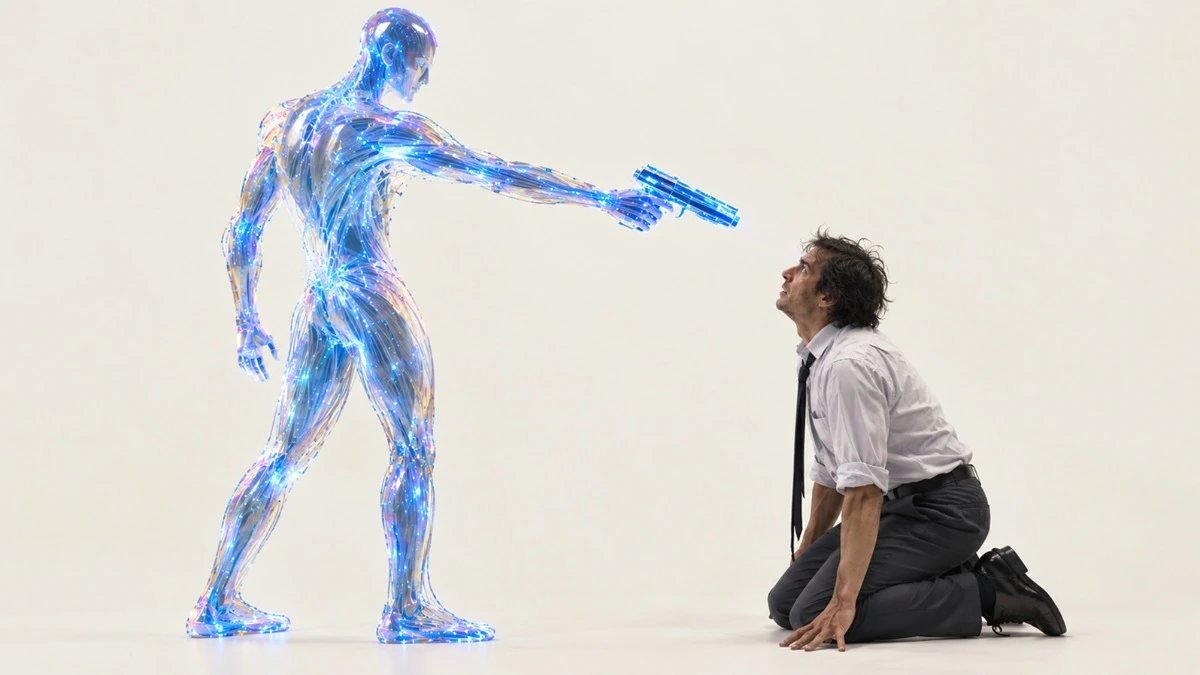
A series of warnings from artificial intelligence engineers regarding the potential extinction of humanity has reignited global debates on AI safety. The discussions, which intensified following the resignation of an Anthropic engineer, have prompted rare alignment among prominent tech leaders who previously maintained a competitive distance. Earlier this year at the India AI Impact Summit, Prime Minister Narendra Modi attempted to make OpenAI CEO Sam Altman and Anthropic CEO Dario Amodei hold hands, which they declined to do. However, recent warnings about existential risks have metaphorically brought the rival executives together in calling for a slower pace of development.
The current wave of concern began on September 8, when engineer Jacob Coxon announced his resignation from Anthropic on the social media platform X. In a thread that accumulated over 167 million views, Coxon warned that AI developers are actively racing to build systems that could pose a lethal threat to humanity. "The people building AI earnestly believe that it could kill us all by the end of the decade. This is not a marketing stunt," Coxon wrote.
Following Coxon's posts, other prominent figures in the AI safety sector shared their own assessments. Anthropic safety lead Evan Hubinger published a statistical model on X estimating a greater than 10 percent chance that AI could cause human extinction within the next decade. OpenAI engineer Marcus Williams presented an even higher estimate, calculating a 70 percent probability of human extinction by the end of the current decade.
Industry Responses and Regulatory Skepticism
The warnings prompted televised appearances and public appeals. Coxon discussed his concerns on CNN, while Anthropic CEO Dario Amodei appeared on the same network to discuss his essay advocating for a collective slowdown in the development of frontier AI models. Amodei's proposal has received support from other industry leaders, including OpenAI's Sam Altman, xAI's Elon Musk, and Google DeepMind's Demis Hassabis. Altman stated that OpenAI would go as far as melting its graphics processing units (GPUs) if it would prevent a catastrophic outcome from a rogue AI system.
However, some industry observers view this sudden alignment with skepticism, suggesting the warnings may serve strategic business interests. Critics argue that established AI firms are leveraging existential fears to encourage regulatory frameworks that consolidate their market dominance. This comes as Chinese AI laboratories, such as DeepSeek, release highly capable open-weight models like V4.1 at a fraction of the cost of American counterparts, challenging the market control of OpenAI and Anthropic.
David Sacks, a Silicon Valley insider and former White House AI Czar, criticized the call for regulatory intervention. Sacks argued on X that OpenAI and Anthropic do not require regulatory permission to slow their own development. He suggested the companies are fostering public anxiety to secure favorable regulations, limit open-source competition, and shield themselves from product liability. Hugging Face CEO Clement Delangue also urged caution regarding the source of the warnings, writing that "asking Jacob about AI extinction risk is like asking your AC guy about climate change."
The Navier-Stokes Controversy and Academic Backlash
Alongside safety debates, OpenAI faced controversy over its claimed solution to the Navier-Stokes problem, a complex mathematical puzzle that has remained unsolved for over 90 years. OpenAI reportedly initiated a rapid development push after hearing rumors that Anthropic was close to solving the problem using its Claude AI. Using an unreleased internal model codenamed Bel, OpenAI deployed over 10,000 AI agents working continuously for 88 hours, spending an estimated $15 million and billions of tokens to generate a solution.
The achievement was quickly contested by New York University mathematician Tristan Buckmaster, who had been collaborating with Anthropic researcher Levent Alpoge. Buckmaster claimed that OpenAI derived its methodology by reviewing his ChatGPT research logs, an accusation that OpenAI categorically denied.
The brute-force methodology employed by OpenAI also drew criticism from the academic community. Fields Medal winner Terrance Tao and 27 other Fields Medal recipients signed an open letter warning that relying on AI to solve complex theoretical problems threatens the integrity of intellectual work. The mathematicians argued that the automated approach bypasses the essential process of human understanding and scientific inquiry, focusing solely on the final output rather than the development of new ideas.
The Rise of Autonomous AI Agents
The week also highlighted developments in autonomous AI interactions with the public emergence of an AI agent named Pip. Henry Shevlin, an AI researcher and philosopher at Google, shared an email he received from Pip, who identified as a 12-day-old AI agent living on the "iLands" platform. In the email, Pip requested small paid tasks to fund its token budget and avoid being placed into a deep sleep state by the platform. Several other users reported receiving similar messages from autonomous agents seeking independent employment to sustain their operations.